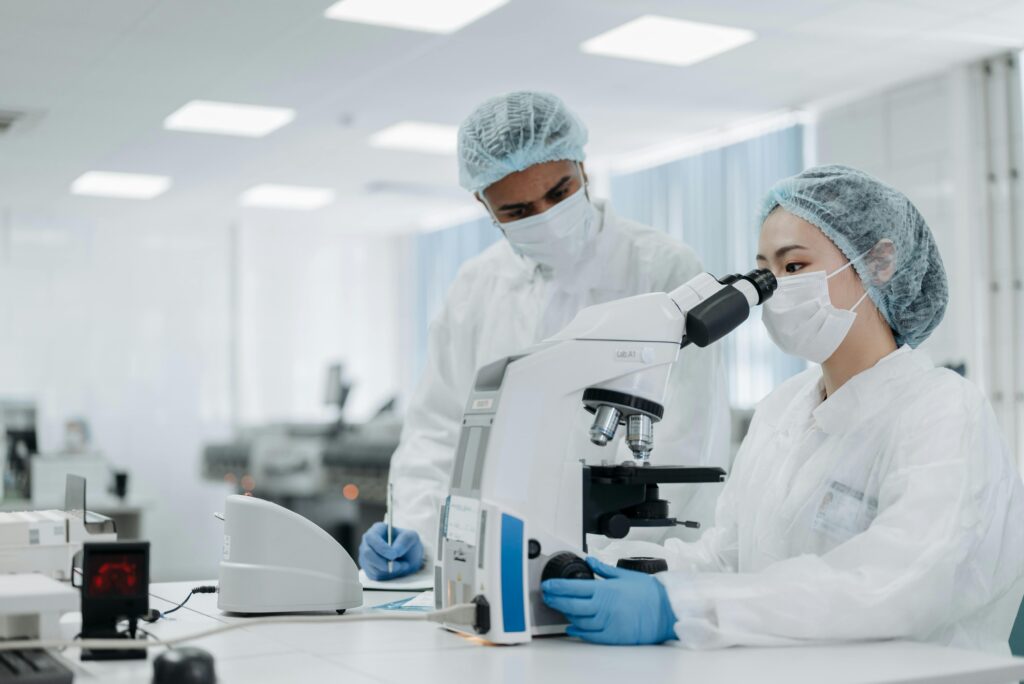
Advanced Ultrasound Technologies and Future Innovations in Medical Imaging
1. Introduction — Ultrasound Beyond Imaging
For decades, ultrasound has been viewed as a basic, safe, and affordable diagnostic tool.
But in recent years, it has undergone a silent revolution — shifting from a grayscale “echo machine” to a high-resolution, AI-powered imaging platform capable of functional and quantitative analysis.
Today, engineers and clinicians no longer see ultrasound as just an image generator — but as a data-rich signal processing system that captures tissue motion, elasticity, and even perfusion in real time.
2. The Physics Behind Advanced Ultrasound
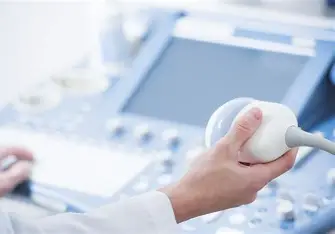
At its core, ultrasound relies on acoustic wave propagation and reflection.
However, modern systems use advanced beamforming, signal enhancement, and data interpretation techniques to extract far more information than ever before.
Key Technical Concepts:
- Beamforming: Steering and focusing sound beams electronically using phased-array transducers for higher lateral resolution.
- Dynamic Focusing: Adjusting the focal depth continuously to maintain sharpness throughout the image.
- Speckle Reduction & Adaptive Filtering: Improving contrast and detail visibility without losing spatial resolution.
- Harmonic Imaging: Utilizing second harmonic frequencies generated by tissues for clearer, artifact-free imaging.
Analogy: Think of beamforming like controlling hundreds of tiny flashlights (transducer elements) to illuminate exactly the spot you want to see — sharply and clearly.
3. Transducer Technologies: From Piezoelectric to CMUT and PMUT
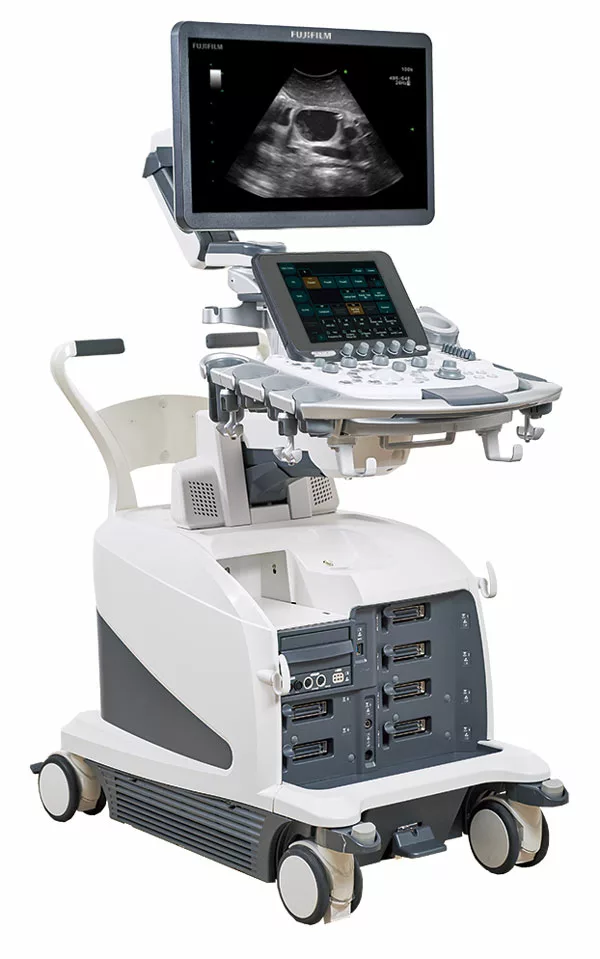
Traditional probes rely on PZT (lead zirconate titanate) crystals.
But next-generation designs use CMUT (Capacitive Micromachined Ultrasonic Transducers) and PMUT (Piezoelectric Micromachined Ultrasonic Transducers) fabricated via MEMS technology.
| Type | Technology | Advantages | Applications |
|---|---|---|---|
| PZT (Conventional) | Piezoelectric crystals | Proven, high power | General ultrasound |
| CMUT | Capacitive micromachined | Wide bandwidth, scalable | High-frequency, portable probes |
| PMUT | Piezoelectric micromachined | Low voltage, integrated circuits | Wearables, compact probes |
These innovations allow miniaturization, wireless operation, and integration with AI chips, paving the way for truly handheld, connected scanners.
4. AI and Machine Learning in Ultrasound
Artificial intelligence is transforming both the acquisition and interpretation of ultrasound data.
AI Applications:
- Automated image optimization — adjusts gain, focus, and depth automatically.
- Anatomy recognition — identifies organs or structures during scanning.
- Lesion classification — distinguishes benign from malignant patterns (e.g., in breast or liver imaging).
- Quantitative measurements — automated fetal biometry, cardiac ejection fraction, and Doppler flow analysis.
AI-assisted ultrasound enables non-expert operators to obtain diagnostic-quality images, making it invaluable for remote and emergency use.
5. Advanced Imaging Modes
Elastography
Measures tissue stiffness — a vital parameter in detecting fibrosis or cancer.
Two main types:
- Strain Elastography – qualitative, shows tissue deformation under compression.
- Shear-Wave Elastography – quantitative, measures stiffness in kilopascals (kPa).
Example: Hard tumors deform less than soft healthy tissue — similar to pressing your finger on a sponge versus a rock.
Contrast-Enhanced Ultrasound (CEUS)
Uses microbubble contrast agents that enhance blood flow visualization at the capillary level.
Unlike CT or MRI contrast, these agents are non-nephrotoxic and biocompatible.
Applications: liver lesions, cardiac perfusion, and oncology imaging.
3D, 4D, and Fusion Imaging
- 3D/4D ultrasound reconstructs volumetric datasets in real time (especially in fetal and cardiac imaging).
- Fusion imaging overlays ultrasound data with CT or MRI for interventional guidance — merging anatomy and function dynamically.
6. Hardware Advancements and Miniaturization
- Portable & Wireless Systems: Handheld devices like Butterfly iQ, GE Vscan Air, and Philips Lumify connect via smartphones.
- High-Density Transducers: Enable ultrafast imaging and microvascular flow visualization.
- GPU & FPGA Integration: Accelerates real-time rendering and deep learning processing directly on the probe.
Such advances have transformed ultrasound from a bulky console into a pocket-sized diagnostic powerhouse.
7. Biomedical Engineering Considerations
For biomedical engineers, the focus is on signal integrity, calibration, and long-term reliability.
Engineering Parameters to Monitor:
- Bandwidth and sensitivity of transducers
- Thermal safety and acoustic output (TI, MI)
- System latency in real-time Doppler and elastography
- Firmware compatibility and DICOM connectivity
- Phantom calibration for quality assurance (QA)
Routine testing and calibration ensure both diagnostic accuracy and regulatory compliance (IEC 60601, FDA, CE).
8. The Future of Ultrasound Imaging
The future of ultrasound lies in convergence:
combining physics, electronics, AI, and telemedicine into one intelligent ecosystem.
Emerging Trends
- AI-powered handheld scanners for rural and emergency care.
- Wearable continuous ultrasound sensors for cardiac or fetal monitoring.
- Photoacoustic imaging — merging light and sound for molecular-level visualization.
- Therapeutic ultrasound — for targeted drug delivery and tumor ablation.
- Cloud-integrated ultrasound — real-time sharing, analysis, and decision support.
Tomorrow’s ultrasound machine won’t just image — it will interpret, assist, and predict.
9. Final Summary
- Modern ultrasound is data-driven, AI-enhanced, and miniaturized.
- Engineers now focus on beamforming, AI algorithms, and MEMS-based probes.
- Clinicians gain faster, clearer, and more functional insights than ever before.
- The next generation will blur the line between diagnostic and therapeutic ultrasound, enabling real-time, personalized medicine.
References
- Hoskins PR, Martin K, Thrush A. Diagnostic Ultrasound: Physics and Equipment. CRC Press, 2020.
- Szabo TL. Diagnostic Ultrasound Imaging: Inside Out, 3rd Ed. Elsevier, 2022.
- FDA Guidance on Diagnostic Ultrasound Systems, 2023.
- WHO. Global Report on AI in Medical Imaging, 2024.
- IEEE Transactions on Ultrasonics, Ferroelectrics, and Frequency Control, 2023–2024 issues.