
Latest Advances of Artificial Intelligence in Healthcare in 2025
Introduction
Artificial Intelligence continues to accelerate across healthcare in 2025, unveiling breakthroughs that are reshaping diagnostics, patient care, clinical workflows, and research. From AI stethoscopes diagnosing heart conditions in seconds to sophisticated AI agents aiding physicians in real time, this year promises transformative innovation. These developments are not only enhancing accuracy and efficiency—they’re revolutionizing how healthcare is delivered and experienced.
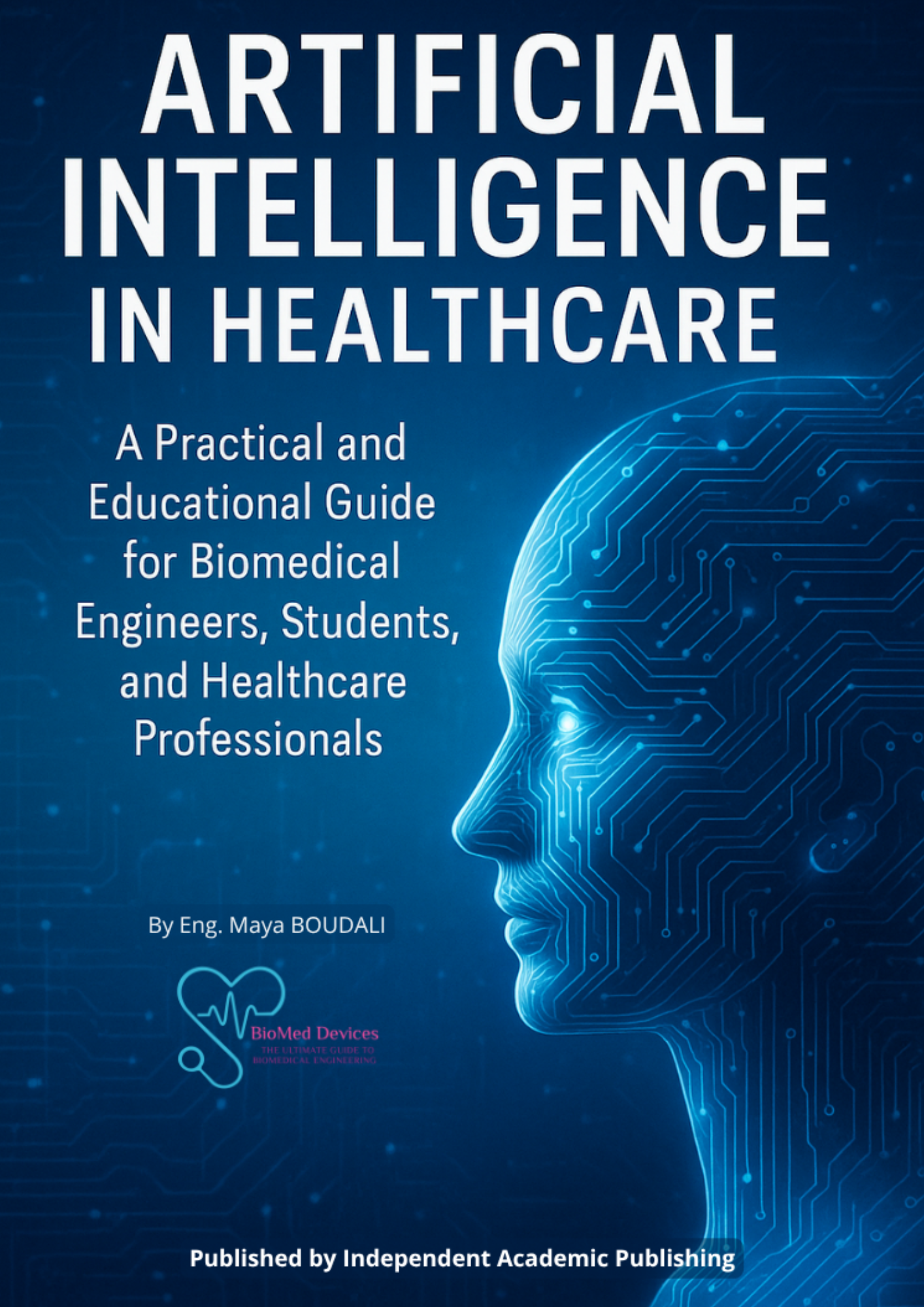
This article delves into the most recent AI-driven healthcare advances of 2025—from pioneering diagnostic tools and next-generation documentation systems to personalized treatment platforms and policy milestones. For biomedical engineers, clinicians, and educators seeking both understanding and practical application, Artificial Intelligence in Healthcare: A Practical and Educational Guide for Biomedical Engineers, Students, and Healthcare Professionals offers detailed case studies, implementation frameworks, and guided reflections to help bridge these innovations into everyday practice.
1. AI-Powered Diagnostic Devices: Speed Meets Accuracy
AI Stethoscope for Heart Conditions
In a trial across nearly 12,000 patients in London, a credit-card-sized AI stethoscope developed by Eko Health, in collaboration with Imperial College London, diagnosed heart failure, valve disease, and atrial fibrillation within 15 seconds—doubling the detection rate for heart failure and tripling it for atrial fibrillation compared to traditional methods.
Microsoft’s Diagnostic Orchestrator
Microsoft introduced the “Diagnostic Orchestrator” (MAI-DxO), a multi-agent AI system that achieved an 85.5% success rate diagnosing complex cases—vastly outperforming the ~20% success rate of experienced physicians in constrained tests.
These advances highlight how AI is augmenting diagnostic accuracy and workflow speed, making high-level clinical insight more accessible at the point of care.
2. AI at Scale: Elevating Clinical Decision Support
OpenEvidence: AI for Physicians
OpenEvidence has rapidly gained adoption—with over 40% of U.S. physicians using its platform daily. The AI system allows clinicians to search through more than 35 million peer-reviewed publications and receive instant, cited answers at the point of care. Its autonomous agent, DeepConsult, synthesizes hundreds of studies into concise research briefs.
Counterforce Health: Fighting Insurance Denials
Founded in early 2025, Counterforce Health offers an AI platform that automates the drafting of appeal letters for denied health-insurance claims. The service boasts a ~70% reversal rate in rural North Carolina, significantly above industry norms.
These systems underscore AI’s widening role—not just in clinical judgments, but also in administrative burdens and operational inefficiencies.
3. Automation in Clinical Documentation
AI Medical Scribes Go Mainstream
AI-powered medical scribes are relieving clinicians of documentation workloads. In the UK’s largest ambient AI rollout, four in five general practitioners reported that these tools saved time and improved patient rapport.
Heidi Health’s Funding Boost
Heidi Health, an Australian startup offering AI-based scribes, raised over $17 million in funding in early 2025 to scale its platform globally.
These innovations are streamlining clinical documentation, reducing burnout, and allowing healthcare providers to focus more on patient interaction.
4. Conversational AI and Wearables For Proactive Care
MICA: UK’s Conversational Care Watch
The ValueCare Group unveiled MICA, a wrist-worn conversational AI assistant that lets users vocalize health updates and receive reminders. Data syncs to a secure dashboard accessible to clinicians or family, making remote, proactive care more dynamic and personalized.
AI Voice Agents in Hospitals
SoundHound’s Amelia 7.0, a conversational AI agent, has been deployed in patient engagement systems within healthcare settings—enabling more interactive, voice-driven support.
5. Personalized Medicine and Oncology Advances
Predicting Tumor Stemness
AI models are now quantifying tumor “stemness”—a predictor of cancer aggressiveness and recurrence—allowing oncologists to tailor treatment timelines and risk stratifications more precisely.
AI-Designed Antibiotics
MIT researchers used AI to design two novel antibiotics effective against MRSA and gonorrhea in preclinical models—a promising step toward addressing antibiotic resistance.
These breakthroughs are catalyzing precision oncology and combating long-standing medical challenges with innovative AI tools.
6. Global Trends and Ethical Considerations
AI Doctors as Complement, Not Replacement
An editorial in The Guardian argued that AI should complement—not replace—human clinicians. AI’s ability to process vast data may improve diagnostic accuracy, especially for rare diseases. However, trust-building and digital equity remain essential for widespread adoption.
Scaling AI in Public Hospitals – South Australia
South Australia is trialing an AI-augmented electronic health record system (“Kiss”) across ICUs, offering real-time risk analytics (e.g., kidney injury alerts) via mobile workstations to support clinicians.
These stories exemplify the growing trust in AI as a collaborative partner in care delivery and system transformation.
Conclusion
2025 has truly been a landmark year for AI in healthcare. From intelligent diagnostic devices like stethoscopes and orchestrator systems, to AI-powered physician tools, scribes, wearables, and oncology breakthroughs—AI is redefining the healthcare landscape with precision, efficiency, and human-centric balance.
For biomedical engineers, clinicians, educators, and students seeking not just awareness but actionable frameworks, Artificial Intelligence in Healthcare: A Practical and Educational Guide for Biomedical Engineers, Students, and Healthcare Professionals offers case-driven insights, strategic tools, and reflective exercises to integrate these innovations responsibly and effectively.
Get your copy from here
References
- Doctors develop AI stethoscope … diagnosing heart failure, atrial fibrillation, valve disease The GuardianThe Scottish Sun
- Microsoft’s MAI-DxO diagnostic system study Financial Times
- AI predicting tumor stemness for oncology planning Crescendo.ai
- MIT-designed AI antibiotics for MRSA/gonorrhea Medium
- The Guardian article advocating AI complementation The Guardian
- South Australia AI EHR system “Kiss” Adelaide Now