Biomaterials in Biomedical Engineering: Types, Properties, Applications, and Future Trends
Biomaterials are the foundation of many modern medical technologies—from artificial joints and heart valves to tissue-engineered scaffolds and drug delivery systems. Understanding how these materials interact with the human body is one of the first and most important steps in studying biomedical engineering.

Table of Contents
- What Are Biomaterials?
- 1.1 Definition
- 1.2 Natural vs. Synthetic Biomaterials
- 1.3 Why Biomaterials Are Essential in Healthcare
- Why Biomaterials Matter in Biomedical Engineering
- Main Types of Biomaterials
- 3.1 Metals
- 3.2 Ceramics
- 3.3 Polymers
- 3.4 Composites
- 3.5 Natural Biomaterials
- Essential Properties of Biomaterials
- Biomedical Applications
- Current Challenges
- Future Directions
- Key Takeaways
- Frequently Asked Questions
- Academic References
1. What Are Biomaterials?
1.1 Definition
The term biomaterials refers to materials that are specifically designed to interact with living systems for medical purposes. They may be used to replace damaged tissues, restore lost biological functions, deliver medications, or assist in diagnosing diseases. Unlike conventional engineering materials, biomaterials must not only perform their intended mechanical function but also interact safely with the human body.
According to the National Institute of Biomedical Imaging and Bioengineering (NIBIB), biomaterials include metals, ceramics, polymers, natural materials, and composites that are engineered into medical devices such as heart valves, dental implants, artificial joints, contact lenses, and tissue-engineering scaffolds.
The field of biomaterials lies at the intersection of several disciplines, including:
- Biomedical engineering
- Materials science
- Biology
- Medicine
- Chemistry
- Mechanical engineering
Because of this interdisciplinary nature, biomaterials have become one of the most rapidly advancing areas in healthcare research.
1.2 Natural vs. Synthetic Biomaterials
Biomaterials are broadly divided into natural and synthetic materials. Each category offers unique advantages and limitations depending on the intended medical application.
Natural Biomaterials
Natural biomaterials originate from living organisms or biological tissues. Since many resemble components already present in the human body, they often support excellent cell attachment and tissue regeneration.
Common examples include:
- Collagen
- Gelatin
- Chitosan
- Alginate
- Silk fibroin
- Hyaluronic acid
These materials are widely used in wound healing, tissue engineering, and regenerative medicine because they provide a biological environment that encourages cells to grow and repair damaged tissues.
Synthetic Biomaterials
Synthetic biomaterials are manufactured through controlled engineering processes. Unlike natural materials, they can be designed with highly specific mechanical, chemical, and physical properties.
Examples include:
- Titanium alloys
- Stainless steel
- Cobalt-chromium alloys
- Polyethylene
- Silicone
- Poly(lactic acid) (PLA)
- Poly(glycolic acid) (PGA)
Synthetic biomaterials are commonly selected when long-term strength, durability, corrosion resistance, or precise manufacturing is required.
Rather than competing with one another, natural and synthetic biomaterials often complement each other. For example, researchers frequently combine collagen with biodegradable polymers to create scaffolds that possess both excellent biological performance and sufficient mechanical strength.
1.3 Why Biomaterials Are Essential in Healthcare
Modern healthcare would be almost unimaginable without biomaterials.
Millions of patients every year benefit from medical devices and implants made from carefully engineered biomaterials. These materials restore mobility, improve organ function, replace damaged tissues, and significantly enhance quality of life.
Some familiar examples include:
- Artificial hip and knee joints
- Dental implants
- Artificial heart valves
- Coronary stents
- Contact lenses
- Surgical sutures
- Bone fixation plates
- Drug delivery implants
Beyond replacing damaged tissues, today’s biomaterials are increasingly designed to actively participate in healing. Modern biomaterials can promote bone formation, stimulate tissue regeneration, deliver therapeutic drugs, and even respond to biological signals inside the body. This shift from passive implants to biologically active materials represents one of the most exciting developments in biomedical engineering.
2. Why Biomaterials Matter in Biomedical Engineering
Biomedical engineering focuses on applying engineering principles to solve medical and healthcare problems. Within this discipline, biomaterials provide the essential link between engineered devices and living tissues.
Whenever an implant is placed inside the body, it immediately encounters blood, proteins, immune cells, and surrounding tissues. These biological systems begin interacting with the material within seconds. Whether the implant succeeds or fails depends largely on how well these interactions are controlled.

For this reason, biomedical engineers carefully evaluate every material before it can be used clinically.
A successful biomaterial should:
- Perform its intended medical function.
- Avoid toxic or harmful effects.
- Resist degradation when necessary.
- Maintain adequate mechanical strength.
- Integrate appropriately with surrounding tissues.
- Minimize inflammation and immune reactions.
One of the greatest challenges in biomedical engineering is designing materials that the body accepts rather than rejects. Even materials traditionally considered “inert,” such as titanium, still trigger biological responses. Modern research therefore aims not merely to avoid adverse reactions but to guide the body’s natural healing processes toward successful tissue integration.
Biomaterials Improve Patient Outcomes
The impact of biomaterials extends far beyond replacing damaged tissues.
They contribute to improved patient outcomes by:
- Restoring movement after severe joint damage.
- Preserving teeth through osseointegrated dental implants.
- Preventing life-threatening arterial blockages with vascular stents.
- Accelerating wound healing using advanced dressings.
- Delivering medications directly to diseased tissues.
- Supporting the regeneration of bone, cartilage, skin, and blood vessels.
As global populations age and chronic diseases become more common, the demand for advanced biomaterials continues to grow rapidly.
3. Main Types of Biomaterials

Biomaterials are generally classified into five major groups, each with distinct properties and clinical applications. Understanding these categories provides a strong foundation for more advanced topics that will be explored in future articles.
3.1 Metallic Biomaterials
Metals have been used in medicine for decades because they possess excellent mechanical strength, toughness, and fatigue resistance.
The most common metallic biomaterials include:
- Titanium and titanium alloys
- Stainless steel
- Cobalt-chromium alloys
- Nitinol (shape-memory alloy)
These materials are widely used in:
- Orthopedic implants
- Dental implants
- Bone fixation plates
- Screws and pins
- Cardiovascular stents
Titanium is especially popular because it combines high strength with exceptional corrosion resistance and excellent biocompatibility. Its natural oxide layer protects the implant from degradation while encouraging strong bonding with surrounding bone tissue through a process known as osseointegration.
3.2 Ceramic Biomaterials

Ceramics are inorganic, non-metallic materials known for their excellent hardness, wear resistance, and chemical stability. Although many traditional ceramics are brittle, biomedical ceramics are engineered to perform safely within the body and, in some cases, actively support tissue healing.
Common bioceramics include:
- Hydroxyapatite (HA): A calcium phosphate ceramic with a chemical composition similar to the mineral component of bone.
- Bioactive glass: A material that bonds directly with bone and can stimulate new bone formation.
- Alumina (Al₂O₃): Used where exceptional wear resistance is required, such as in joint replacements.
- Zirconia (ZrO₂): Valued for its high strength and attractive appearance, making it popular in dental restorations.
Unlike most metals, some ceramics are bioactive, meaning they interact positively with surrounding tissues rather than simply remaining inert. For example, hydroxyapatite coatings are often applied to titanium implants to improve bone attachment and accelerate healing.
Ceramics are widely used in:
- Bone graft substitutes
- Dental crowns and implants
- Hip joint components
- Bone defect fillers
Because of their brittleness, ceramics are often combined with metals or polymers to create composite biomaterials that provide both strength and biological activity.
3.3 Polymeric Biomaterials

Polymers are among the most versatile biomaterials used in medicine. They consist of long chains of repeating molecular units, allowing engineers to tailor their flexibility, strength, degradation rate, and chemical properties for specific applications.
Examples of biomedical polymers include:
- Polyethylene (PE)
- Polyurethane (PU)
- Silicone
- Poly(methyl methacrylate) (PMMA)
- Poly(lactic acid) (PLA)
- Poly(glycolic acid) (PGA)
- Poly(lactic-co-glycolic acid) (PLGA)
One of the greatest advantages of polymers is their design flexibility. They can be manufactured as:
- Flexible films
- Fibers
- Hydrogels
- Porous scaffolds
- Microspheres
- Nanoparticles
Many modern drug delivery systems rely on biodegradable polymers that gradually release medication over time before safely breaking down within the body.
Hydrogels—a special class of polymers capable of absorbing large amounts of water—closely resemble natural soft tissues and are widely investigated for cartilage repair, wound healing, and tissue engineering.
3.4 Composite Biomaterials

Composite biomaterials combine two or more different materials to achieve properties that cannot be obtained using a single material alone.
For example:
- Carbon fiber-reinforced polymers combine high strength with low weight.
- Hydroxyapatite-polymer composites combine the biological activity of ceramics with the flexibility of polymers.
- Glass fiber composites improve mechanical performance while reducing implant weight.
Nature itself provides an excellent example of a composite material: human bone, which combines collagen fibers with hydroxyapatite crystals to achieve remarkable strength and toughness.
Biomedical engineers frequently mimic this natural design principle when developing advanced implants.
3.5 Natural Biomaterials
Natural biomaterials are derived from biological sources such as plants, animals, or microorganisms. Because they resemble components already present in the body, they often exhibit excellent biocompatibility and support cell growth.
Common examples include:
- Collagen
- Gelatin
- Chitosan
- Alginate
- Silk fibroin
- Hyaluronic acid
These materials play an essential role in:
- Tissue engineering
- Regenerative medicine
- Wound dressings
- Controlled drug delivery
- Artificial skin substitutes
However, natural biomaterials may exhibit lower mechanical strength and greater variability than synthetic materials. Consequently, researchers often combine them with engineered polymers to create hybrid materials that provide both biological compatibility and structural support.
4. Essential Properties of Biomaterials
Choosing a biomaterial is about far more than selecting the strongest or cheapest material. Biomedical engineers must carefully balance multiple properties to ensure safe and effective performance inside the human body.
4.1 Biocompatibility
Biocompatibility is widely regarded as the most important property of any biomaterial.
It describes the ability of a material to perform its intended function while producing an appropriate biological response in the host.
A biocompatible material should:
- Avoid toxicity
- Minimize inflammation
- Prevent severe immune reactions
- Support normal tissue function
- Integrate appropriately with surrounding tissues
Importantly, biocompatibility is context-dependent. A material that performs well as a hip implant may not be suitable for cardiovascular applications because different tissues have different biological requirements.
4.2 Mechanical Strength
Medical implants must withstand the mechanical forces generated during everyday activities.
For example:
- Hip implants support body weight during walking.
- Dental implants endure repeated chewing forces.
- Bone plates stabilize fractured bones under continuous loading.
Insufficient mechanical strength can result in implant fracture, deformation, or failure.
4.3 Corrosion Resistance
The human body is a chemically active environment containing salts, proteins, and biological fluids that can gradually corrode certain metals.
Corrosion may lead to:
- Loss of implant strength
- Release of metal ions
- Tissue irritation
- Implant failure
Titanium is highly valued because its protective oxide layer provides exceptional resistance to corrosion.
4.4 Wear Resistance
Many orthopedic implants involve continuous movement between two surfaces.
Examples include:
- Hip replacements
- Knee replacements
- Artificial shoulder joints
Over time, friction can produce microscopic wear particles. These particles may trigger inflammation and contribute to implant loosening.
Improving wear resistance remains an important area of biomaterials research.
4.5 Bioactivity
Unlike inert materials, bioactive biomaterials actively interact with surrounding tissues.
Bioactive materials can:
- Promote bone formation
- Encourage cell attachment
- Stimulate tissue regeneration
- Improve implant integration
Bioactive glass and hydroxyapatite are well-known examples of materials that actively encourage bone healing.
4.6 Biodegradability
Some medical devices are intended to disappear after completing their function.
Biodegradable biomaterials are used in:
- Absorbable sutures
- Temporary bone fixation devices
- Drug delivery systems
- Tissue engineering scaffolds
An ideal biodegradable material degrades at a controlled rate while producing non-toxic byproducts that are safely eliminated by the body.
4.7 Sterilizability
Every implant and medical device must be sterilized before clinical use to eliminate harmful microorganisms.
Therefore, biomaterials must tolerate sterilization methods such as:
- Steam sterilization
- Gamma irradiation
- Ethylene oxide sterilization
- Electron beam sterilization
Without losing their structural integrity or biological performance.
These properties rarely exist in perfect balance. For example, increasing mechanical strength may reduce biodegradability, while improving bioactivity may influence long-term stability. As a result, biomaterials engineering often involves optimizing trade-offs to meet the specific needs of each medical application.
5. Biomedical Applications
One of the main reasons biomaterials are considered a cornerstone of biomedical engineering is their wide range of clinical applications. They are found in nearly every area of modern medicine, from orthopedic surgery and dentistry to regenerative medicine and wearable healthcare devices.
The selection of a biomaterial depends on several factors, including the target tissue, required mechanical properties, expected lifespan of the device, and the body’s biological response.
5.1 Orthopedic Implants
Orthopedic implants are among the most common applications of biomaterials. These devices restore mobility and improve quality of life for patients suffering from fractures, arthritis, osteoporosis, or traumatic injuries.
Examples include:
- Hip replacements
- Knee replacements
- Bone plates
- Intramedullary nails
- Bone screws
- Spinal fixation systems
Titanium alloys and cobalt-chromium alloys are widely used because they combine excellent strength with high corrosion resistance and outstanding biocompatibility. In many cases, implant surfaces are modified with hydroxyapatite coatings to enhance osseointegration, allowing the implant to bond more effectively with surrounding bone.
As the global population ages, the demand for orthopedic implants continues to rise, making this one of the fastest-growing areas of biomaterials research.
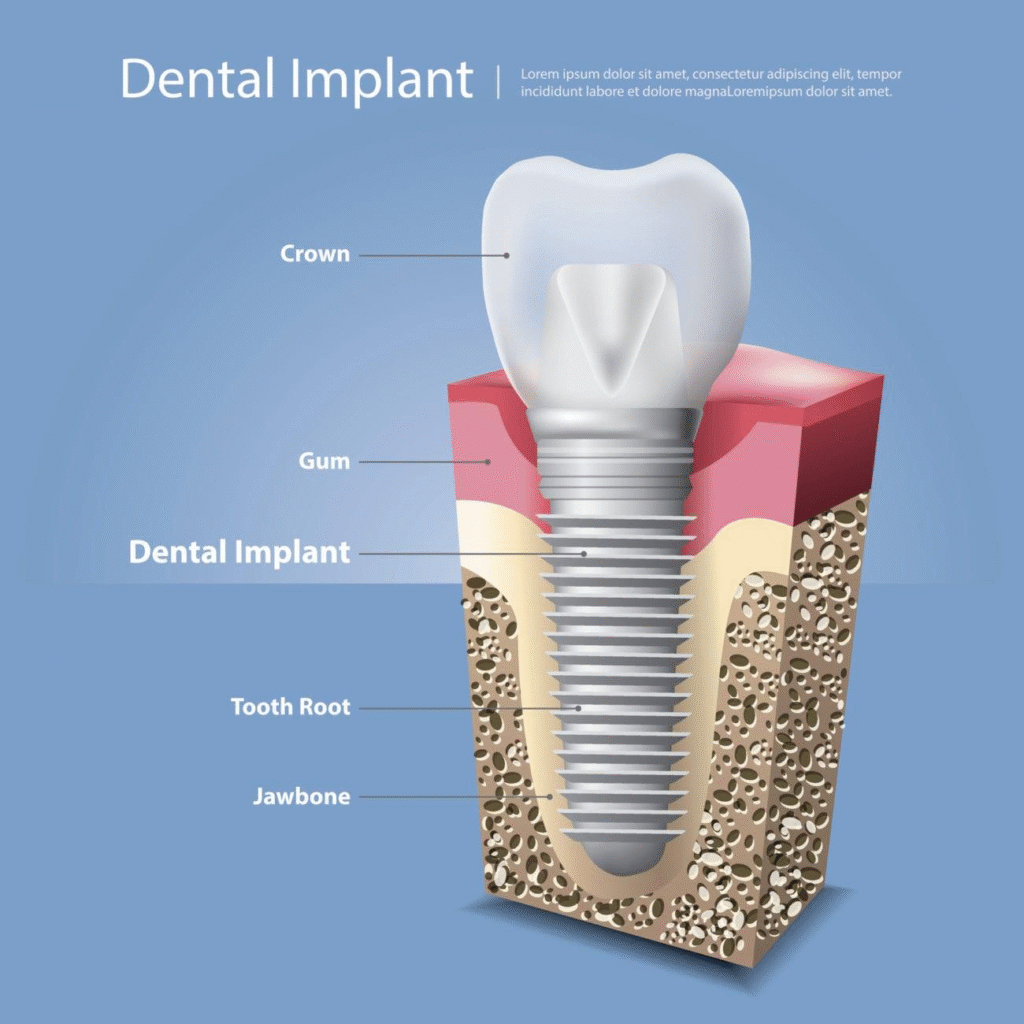
5.2 Dental Implants
Dental biomaterials have transformed restorative dentistry by providing durable and aesthetically pleasing solutions for replacing damaged or missing teeth.
Common dental biomaterials include:
- Titanium dental implants
- Zirconia implants
- Dental ceramics
- Composite resins
- Glass ionomer cements
One of the most remarkable features of titanium dental implants is osseointegration, a process in which bone tissue grows directly onto the implant surface, creating a stable and long-lasting attachment.
Modern dental biomaterials are also designed to resist corrosion, withstand repeated chewing forces, and maintain an appearance that closely resembles natural teeth.
5.3 Cardiovascular Devices
Cardiovascular diseases remain one of the leading causes of death worldwide. Biomaterials play a vital role in treating many of these conditions through implantable medical devices.
Examples include:
- Artificial heart valves
- Coronary stents
- Vascular grafts
- Pacemaker leads
- Heart assist devices
These devices must function reliably in a highly dynamic environment where they are continuously exposed to blood flow, pressure changes, and mechanical stress.
For cardiovascular applications, biomaterials must minimize blood clot formation (thrombosis), reduce inflammation, and resist long-term degradation.
5.4 Tissue Engineering

Rather than simply replacing damaged tissues, tissue engineering aims to regenerate them.
This emerging field combines:
- Biomaterials
- Living cells
- Growth factors
- Bioactive molecules
The biomaterial serves as a scaffold, providing temporary structural support while cells grow and produce new tissue.
An ideal scaffold should:
- Be biocompatible
- Possess interconnected pores for nutrient transport
- Degrade gradually as new tissue forms
- Support cell attachment and proliferation
Researchers are developing scaffolds for repairing bone, cartilage, skin, blood vessels, nerves, and even complex organs.
5.5 Drug Delivery Systems
Traditional medications often circulate throughout the body, exposing healthy tissues to unnecessary side effects.
Biomaterials have enabled the development of controlled drug delivery systems, which release therapeutic agents at the right place, in the right amount, and at the right time.
Examples include:
- Biodegradable microspheres
- Polymeric nanoparticles
- Hydrogels
- Drug-eluting stents
- Implantable drug reservoirs
These systems improve treatment effectiveness while reducing dosing frequency and adverse effects.
5.6 Wound Dressings
Advanced wound dressings have evolved far beyond simple bandages.
Modern biomaterial-based dressings may:
- Maintain a moist healing environment
- Prevent bacterial infection
- Absorb excess wound fluid
- Deliver antimicrobial agents
- Stimulate tissue regeneration
Materials such as collagen, alginate, chitosan, and hydrogels are widely used in treating burns, diabetic ulcers, and chronic wounds.
5.7 Medical Sensors and Wearable Devices

Recent advances in flexible biomaterials have accelerated the development of wearable and implantable medical sensors.
These technologies can continuously monitor:
- Blood glucose
- Heart rate
- Blood pressure
- Oxygen saturation
- Body temperature
Flexible polymeric materials allow these sensors to conform comfortably to the skin or integrate safely within the body.
Such devices are expected to play an increasingly important role in personalized healthcare and remote patient monitoring.
6. Current Challenges
Despite decades of progress, biomaterials still face several significant challenges.
6.1 Implant Rejection
Although many biomaterials are highly biocompatible, the body may still recognize an implant as foreign. This can trigger inflammation or a foreign body response, reducing the long-term success of the implant.
Researchers continue to investigate surface modifications and bioactive coatings that encourage more favorable interactions between implants and surrounding tissues.
6.2 Infection
Implant-associated infections remain one of the most serious complications in biomedical engineering.
Bacteria can adhere to implant surfaces and form biofilms—protective communities that are highly resistant to antibiotics and the immune system.
Current research focuses on developing antibacterial coatings, antimicrobial peptides, and surface nanostructures that reduce bacterial attachment.
6.3 Wear and Mechanical Fatigue
Repeated loading and friction gradually produce microscopic wear particles, especially in joint replacements.
These particles may:
- Trigger chronic inflammation
- Cause bone loss around the implant
- Lead to implant loosening
- Require revision surgery
Improving wear resistance remains a major objective for orthopedic biomaterials.
6.4 Long-Term Stability
Many implants are expected to function for decades.
Over time, biomaterials may experience:
- Corrosion
- Fatigue
- Chemical degradation
- Structural changes
Ensuring reliable long-term performance is essential for reducing complications and improving patient outcomes.
6.5 Manufacturing Cost
Developing advanced biomaterials often involves:
- High-purity raw materials
- Sophisticated manufacturing methods
- Extensive testing
- Strict regulatory approval
These factors increase production costs and may limit access to advanced medical technologies in some healthcare systems.
7. Future Directions
The future of biomaterials extends beyond simply replacing damaged tissues. Researchers are increasingly designing materials that actively communicate with cells, respond to their environment, and even guide the body’s natural healing processes.
7.1 Smart Biomaterials
Smart biomaterials can respond to changes in:
- Temperature
- pH
- Mechanical stress
- Light
- Magnetic fields
- Biological molecules
These responsive materials may release drugs only when needed or alter their properties in response to disease.
7.2 Nanobiomaterials
Nanotechnology enables scientists to engineer biomaterials at the nanometer scale, where many biological interactions naturally occur.
Nanobiomaterials offer:
- Enhanced drug delivery
- Improved cell attachment
- Greater antibacterial activity
- Better control of implant surfaces
Their high surface area makes them particularly effective for regenerative medicine.
7.3 3D Bioprinting
One of the most exciting developments in biomedical engineering is 3D bioprinting.
Instead of printing plastic or metal, bioprinters deposit:
- Living cells
- Biomaterial-based bioinks
- Growth factors
Layer by layer to create functional biological structures.
Researchers have already demonstrated experimental bioprinted skin, cartilage, blood vessels, and miniature organs, with the long-term goal of producing transplantable organs.
7.4 Regenerative Medicine
Regenerative medicine seeks to restore normal tissue function rather than simply replacing damaged structures.
Future biomaterials will likely:
- Recruit the body’s own stem cells
- Deliver regenerative molecules
- Direct tissue growth
- Reduce scar formation
This approach has the potential to revolutionize treatments for chronic diseases and traumatic injuries.
7.5 Personalized Implants
Advances in medical imaging, computer-aided design (CAD), and additive manufacturing now allow engineers to produce implants tailored to an individual patient’s anatomy.
Personalized implants can:
- Improve comfort
- Enhance surgical outcomes
- Reduce recovery time
- Increase implant longevity
As these technologies become more affordable, customized biomaterials are expected to become increasingly common in clinical practice.
8. Key Takeaways
- Biomaterials are specially designed materials that safely interact with living tissues for medical purposes.
- They form the foundation of many biomedical engineering innovations, including implants, prostheses, tissue-engineered scaffolds, and drug delivery systems.
- The five major classes of biomaterials are metals, ceramics, polymers, composites, and natural biomaterials.
- Successful biomaterials must possess appropriate biocompatibility, mechanical strength, corrosion resistance, wear resistance, bioactivity, biodegradability, and sterilizability.
- Biomaterials have transformed healthcare by improving treatments in orthopedics, dentistry, cardiovascular medicine, regenerative medicine, and medical diagnostics.
- Ongoing research focuses on overcoming challenges such as implant rejection, infection, material degradation, and manufacturing costs.
- Emerging technologies—including smart biomaterials, nanobiomaterials, 3D bioprinting, regenerative medicine, and personalized implants—are shaping the future of biomedical engineering.
- A solid understanding of biomaterials provides the foundation for exploring more advanced topics in biomedical engineering and materials science.
References
Wagner, W. R., Sakiyama-Elbert, S. E., Zhang, G., & Yaszemski, M. J. (Eds.). (2020). Biomaterials science: An introduction to materials in medicine (4th ed.). Elsevier. https://doi.org/10.1016/C2017-0-02323-6
Williams, D. F. (2008). On the mechanisms of biocompatibility. Biomaterials, 29(20), 2941–2953. https://doi.org/10.1016/j.biomaterials.2008.04.023
Williams, D. F. (2019). The future of biomaterials. Biomaterials, 197, 2–9. https://doi.org/10.1016/j.biomaterials.2019.01.003
Hench, L. L., & Jones, J. R. (2015). Bioactive glasses: Frontiers and challenges. Frontiers in Bioengineering and Biotechnology, 3, Article 194. https://doi.org/10.3389/fbioe.2015.00194
Zhang, X., & Williams, D. F. (Eds.). (2019). Definitions in biomaterials for the twenty-first century. Elsevier. https://doi.org/10.1016/C2017-0-04043-3
Ratner, B. D., Hoffman, A. S., Schoen, F. J., & Lemons, J. E. (Eds.). (2013). Biomaterials science: An introduction to materials in medicine (3rd ed.). Academic Press.
National Center for Biotechnology Information. (n.d.). NCBI Bookshelf. https://www.ncbi.nlm.nih.gov/books/
National Institute of Biomedical Imaging and Bioengineering. (n.d.). Biomaterial technologies. https://www.nibib.nih.gov/science-education/science-topics/biomaterial-technologies
World Health Organization. (n.d.). Medical devices. https://www.who.int/health-topics/medical-devices
Comprehensive Biomaterials II. (2017). Elsevier. https://www.sciencedirect.com/referencework/9780081006924/comprehensive-biomaterials-ii
O’Brien, F. J. (2011). Biomaterials & scaffolds for tissue engineering. Materials Today, 14(3), 88–95. https://doi.org/10.1016/S1369-7021(11)70058-X
Bose, S., Vahabzadeh, S., & Bandyopadhyay, A. (2013). Bone tissue engineering using 3D printing. Materials Today, 16(12), 496–504. https://doi.org/10.1016/j.mattod.2013.11.017