Table of Contents
- What Is Biomechanics?
- 1.1 Definition
- 1.2 Biomechanics and Biomedical Engineering
- 1.3 Historical Development
- Why Biomechanics Matters in Biomedical Engineering
- 2.1 Understanding Human Movement
- 2.2 Injury Prevention
- 2.3 Medical Device Design
- 2.4 Prosthetics and Orthotics
- 2.5 Rehabilitation Engineering
- 2.6 Sports Medicine
- Fundamental Principles of Biomechanics
- 3.1 Force and Motion
- 3.2 Newton’s Laws of Motion
- 3.3 Torque and Equilibrium
- 3.4 Stress and Strain
- 3.5 Elasticity and Viscoelasticity
- Mechanical Properties of Biological Tissues
- Applications in Biomedical Engineering
- Current Challenges
- Future Directions
- Key Takeaways
- Frequently Asked Questions
- Academic References
Introduction
Biomechanics is one of the most important scientific disciplines within biomedical engineering because it explains how living organisms respond to mechanical forces. Every movement—from taking a step to lifting an object or even pumping blood through the heart—is governed by biomechanical principles.
By combining concepts from mechanics, physics, biology, anatomy, and engineering, biomechanics helps researchers and clinicians understand how the human body functions under normal and abnormal conditions. This knowledge forms the foundation for designing artificial joints, prosthetic limbs, rehabilitation technologies, orthopedic implants, wearable devices, and advanced medical robotics.
Whether you are a biomedical engineering student, healthcare professional, or simply curious about how engineering improves human health, understanding biomechanics provides the essential knowledge needed before exploring more specialized topics.
This article serves as a beginner-friendly introduction to biomechanics and lays the groundwork for future articles covering advanced concepts and real-world biomedical engineering applications.
1. What Is Biomechanics?
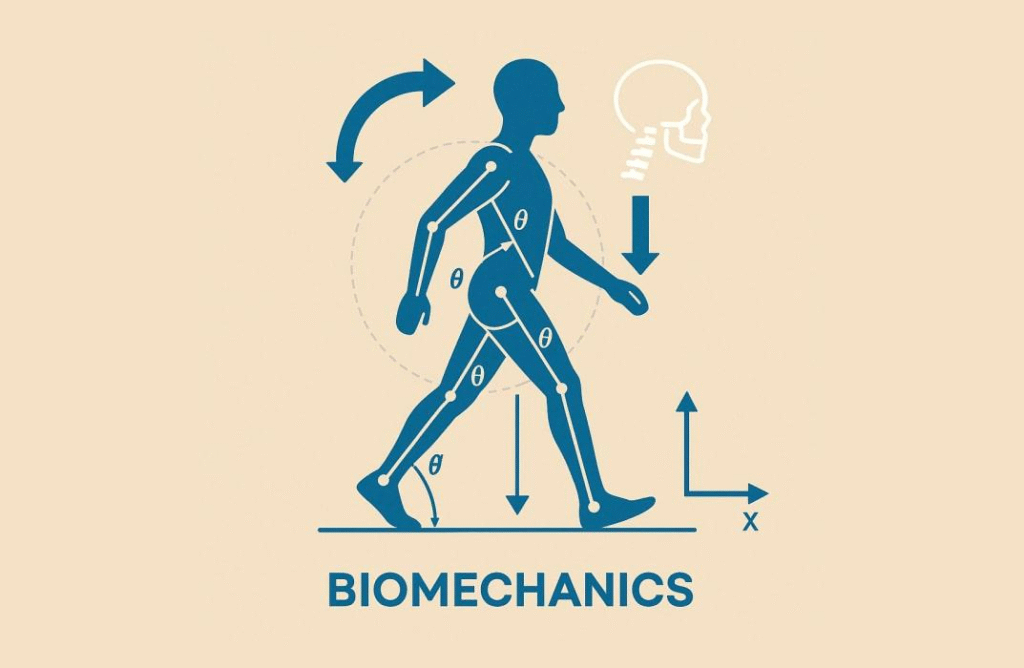
Biomechanics is the scientific study of the mechanical behavior of living organisms. It investigates how forces interact with biological structures such as bones, muscles, tendons, ligaments, cartilage, and internal organs.
In simple terms, biomechanics seeks to answer questions such as:
- Why do humans walk the way they do?
- How do bones support body weight?
- Why do certain injuries occur?
- How can engineers design safer medical devices?
Unlike traditional mechanics, which focuses on machines and rigid structures, biomechanics studies biological systems that are dynamic, adaptable, and continuously changing throughout life.
1.2 Relationship Between Mechanics and Biology
Biomechanics is an interdisciplinary field that bridges two major sciences:
- Mechanics, which studies forces, motion, and the behavior of physical systems.
- Biology, which examines the structure and function of living organisms.
When combined, these disciplines allow scientists to analyze how the human body generates movement, absorbs impact, maintains balance, and adapts to physical stress.
For example:
- Bones act as structural supports.
- Muscles generate force.
- Tendons transmit force from muscles to bones.
- Ligaments stabilize joints.
- Cartilage reduces friction during movement.
Together, these tissues form a highly coordinated mechanical system capable of remarkable performance.
1.3 Biomechanics vs. Biomedical Engineering
Although closely related, biomechanics and biomedical engineering are not identical.
Biomechanics is a scientific discipline focused on understanding the mechanical behavior of biological systems.
Biomedical engineering is a broader engineering field that applies engineering principles to medicine and healthcare.
Biomechanics provides many of the scientific principles that biomedical engineers use to develop:
- Artificial joints
- Prosthetic limbs
- Orthopedic implants
- Rehabilitation devices
- Wearable health technologies
- Surgical robots
In other words, biomechanics provides the knowledge, while biomedical engineering transforms that knowledge into practical healthcare solutions.
1.4 Historical Development
The foundations of biomechanics date back several centuries.
During the Renaissance, Leonardo da Vinci carefully studied human anatomy and movement through detailed sketches, recognizing the body as a mechanical system. Later, Galileo Galilei investigated the strength of bones and the effects of mechanical loading. In the seventeenth century, Isaac Newton established the laws of motion, which remain fundamental to biomechanical analysis today.
The twentieth century marked the rapid growth of biomechanics as advances in medical imaging, computer modeling, materials science, and computing enabled researchers to study complex biological systems with unprecedented accuracy. Today, biomechanics plays a central role in modern biomedical engineering, orthopedics, rehabilitation, sports science, and medical device development.
2. Why Biomechanics Matters in Biomedical Engineering
Biomechanics is far more than an academic subject. It has transformed healthcare by improving our understanding of the human body and enabling the design of technologies that restore movement, reduce injury, and enhance quality of life.
2.1 Understanding Human Movement
Every human movement results from the interaction between muscles, bones, joints, and the nervous system.
Biomechanics helps researchers analyze:
- Walking
- Running
- Jumping
- Lifting
- Balance
- Posture
Understanding these movements allows clinicians to identify abnormalities caused by injury, aging, or disease.
2.2 Injury Prevention
Mechanical loading is essential for healthy tissues, but excessive or repetitive loading can lead to injury.
Biomechanics helps identify risk factors for conditions such as:
- Stress fractures
- Tendon injuries
- Ligament tears
- Lower back pain
- Sports-related injuries
This knowledge supports the development of safer workplaces, improved athletic training programs, and injury prevention strategies.
2.3 Medical Device Design
Medical devices must function safely within the complex mechanical environment of the human body.
Biomechanical analysis guides the design of:
- Hip implants
- Knee replacements
- Bone fixation plates
- Dental implants
- Cardiovascular stents
By understanding the forces acting on these devices, engineers can improve their durability, functionality, and long-term performance.
2.4 Prosthetics and Orthotics
Modern prosthetic limbs aim to replicate natural movement as closely as possible.
Biomechanics enables engineers to optimize:
- Joint alignment
- Weight distribution
- Energy efficiency
- Walking stability
- User comfort
Similarly, orthotic devices provide external support to improve mobility and reduce pain for individuals with musculoskeletal disorders.
2.5 Rehabilitation Engineering
After injury or surgery, patients often need rehabilitation to regain strength and mobility.
Biomechanical assessments help clinicians monitor recovery, personalize therapy programs, and evaluate treatment effectiveness using objective measurements rather than observation alone.
2.6 Sports Medicine
Athletes constantly seek to improve performance while minimizing injury risk.
Sports biomechanics examines movement patterns to:
- Optimize running technique
- Improve jumping mechanics
- Enhance throwing efficiency
- Reduce joint stress
- Design better sports equipment
These applications benefit not only elite athletes but also recreational exercisers and patients undergoing physical rehabilitation.
3. Fundamental Principles of Biomechanics
Biomechanics is built upon several fundamental mechanical concepts. While these ideas often involve mathematics, understanding their basic meanings is sufficient for beginners.
3.1 Force and Motion
A force is any push or pull that changes the motion or shape of an object.
Examples in the human body include:
- Muscle contractions pulling on bones
- Gravity acting on body weight
- Ground reaction forces during walking
- External loads such as lifting a backpack
Motion occurs whenever these forces cause changes in position, speed, or direction.
3.2 Newton’s Laws of Motion
Newton’s three laws form the foundation of classical biomechanics.
- First Law (Inertia): A body remains at rest or in constant motion unless acted upon by an external force.
- Second Law: Greater forces produce greater acceleration, depending on the object’s mass.
- Third Law: Every action produces an equal and opposite reaction.
For example, when walking, your foot pushes against the ground, and the ground pushes back with an equal reaction force that propels your body forward.
3.3 Torque and Equilibrium
Torque is the turning effect produced when a force acts around a joint or pivot.
Muscles generate torque to rotate body segments during movement.
Equilibrium occurs when all forces and torques acting on the body are balanced, allowing stable posture and controlled movement.
Maintaining equilibrium is essential for activities such as standing, walking, and lifting objects safely.
3.4 Stress and Strain
When tissues experience mechanical loading, two important concepts describe their response.
- Stress refers to the internal force distributed within a material.
- Strain describes how much the material deforms in response to that force.
Understanding stress and strain helps engineers predict whether biological tissues or implants can withstand everyday activities without failure.
3.5 Elasticity and Viscoelasticity
Many biological tissues exhibit elasticity, meaning they return to their original shape after the applied force is removed.
However, most living tissues are also viscoelastic, meaning their behavior depends not only on the magnitude of the force but also on how quickly and for how long the force is applied.
This property explains why tendons, ligaments, cartilage, and skin respond differently to sudden impacts compared with slow, sustained loading. Recognizing viscoelastic behavior is essential for designing implants, rehabilitation protocols, and protective equipment that interact safely with the human body.
4. Mechanical Properties of Biological Tissues
Living tissues are remarkable engineering materials. Unlike metals or plastics, biological tissues are capable of growing, healing, adapting to mechanical loading, and continuously remodeling throughout life. Each tissue has unique mechanical characteristics that enable it to perform specialized functions while maintaining the body’s structural integrity.
Understanding these properties is essential for biomedical engineers because implants, prostheses, and rehabilitation devices must interact safely with biological tissues under a wide range of loading conditions.
4.1 Bone
Bone serves as the body’s primary structural framework. It provides support, protects vital organs, stores minerals, and acts as a lever system for movement.
From a biomechanical perspective, bone is both strong and lightweight. It can withstand large compressive loads during standing and walking while resisting bending and twisting forces.
An important characteristic of bone is its ability to remodel according to mechanical loading. Regular physical activity strengthens bone, whereas prolonged inactivity or aging can reduce bone density and increase fracture risk.
4.2 Cartilage
Cartilage covers the ends of bones within joints, providing a smooth, lubricated surface that minimizes friction and distributes loads during movement.
Unlike bone, cartilage has no direct blood supply, making its healing capacity relatively poor. This limitation explains why cartilage injuries often require long recovery periods or surgical intervention.
Its unique composition allows it to absorb shock efficiently during activities such as walking, running, and jumping.
4.3 Tendons
Tendons connect muscles to bones and transmit the forces generated by muscle contractions.
They possess high tensile strength because they are composed primarily of densely packed collagen fibers aligned in the direction of loading.
This alignment enables tendons to efficiently transfer muscular force while storing and releasing elastic energy during repetitive movements such as running.
4.4 Ligaments
Ligaments connect bone to bone and stabilize joints.
Although similar in composition to tendons, ligaments are slightly more flexible, allowing controlled joint motion while preventing excessive movement that could cause injury.
Common examples include the anterior cruciate ligament (ACL) and medial collateral ligament (MCL) of the knee.
4.5 Skeletal Muscle
Skeletal muscles generate the forces responsible for voluntary movement.
Unlike passive tissues such as bone, muscles actively contract in response to signals from the nervous system. Their ability to produce force depends on muscle length, contraction speed, fatigue, and neural activation.
Biomechanical analysis of muscle function helps improve rehabilitation programs, prosthetic control systems, and robotic exoskeletons.
4.6 Skin
Skin is the body’s largest organ and functions as both a protective barrier and a mechanically active tissue.
Its elasticity allows it to stretch during movement while maintaining structural integrity. Engineers must understand skin biomechanics when designing wearable sensors, prosthetic sockets, medical adhesives, and surgical devices.
4.7 Key Mechanical Properties
Although each tissue is unique, several mechanical properties are commonly used to describe biological materials.
- Stiffness refers to a material’s resistance to deformation under an applied force.
- Strength describes the maximum load a tissue can withstand before failure.
- Elasticity is the ability of a tissue to return to its original shape after deformation.
- Anisotropy means that a tissue’s mechanical behavior depends on the direction of loading. For example, tendons are much stronger along the direction of their collagen fibers than across them.
- Viscoelasticity refers to time-dependent mechanical behavior. Many tissues respond differently to rapid loading than to slow, sustained loading.
These properties are fundamental to understanding how biological tissues function under normal physiological conditions and how they respond to injury or medical interventions.
5. Applications of Biomechanics in Biomedical Engineering
Biomechanics forms the scientific foundation for numerous biomedical engineering innovations. By understanding how forces interact with biological tissues, engineers can design technologies that improve patient care, restore mobility, and enhance quality of life.
Each application introduced below will be explored in greater depth in future articles within this biomechanics series.
5.1 Orthopedic Implants
Orthopedic implants—including bone plates, screws, spinal fixation systems, and hip implants—must withstand millions of loading cycles throughout their lifetime.
Biomechanical testing helps engineers evaluate implant strength, fatigue resistance, and compatibility with surrounding bone tissue before clinical use.
5.2 Prosthetic Limbs
Modern prosthetic limbs are designed to reproduce natural human movement as closely as possible.
Biomechanics guides the optimization of:
- Joint alignment
- Energy efficiency
- Walking stability
- User comfort
- Force distribution
Advanced prostheses increasingly incorporate sensors and microprocessors that adapt to different walking environments.
5.3 Artificial Joints
Artificial hip and knee replacements restore mobility for millions of patients worldwide.
Biomechanical research helps engineers improve implant geometry, material selection, lubrication, wear resistance, and long-term durability, reducing the likelihood of implant failure or revision surgery.
5.4 Rehabilitation Engineering
Rehabilitation engineering combines biomechanics with robotics, electronics, and clinical practice to assist patients recovering from injury or neurological disorders.
Examples include robotic gait trainers, powered exoskeletons, balance assessment systems, and assistive technologies for individuals with mobility impairments.
5.5 Gait Analysis
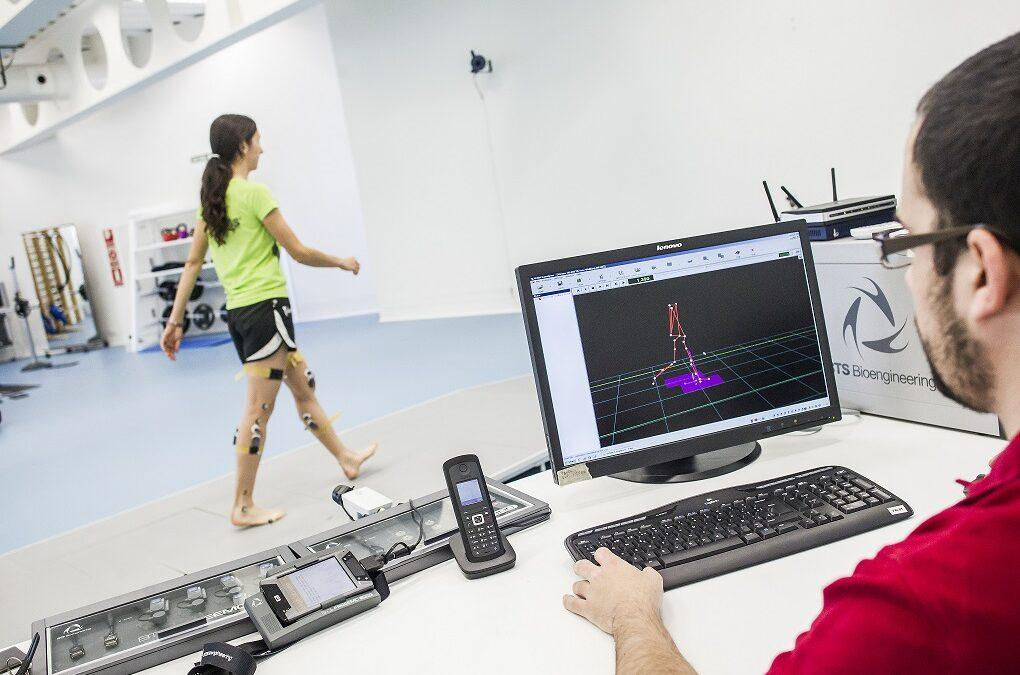
Gait analysis involves the quantitative study of walking patterns using motion capture systems, force plates, wearable sensors, and computer software.
It assists clinicians in diagnosing movement disorders, evaluating rehabilitation progress, and optimizing prosthetic alignment.
5.6 Sports Biomechanics
Athletes continually seek methods to improve performance while minimizing injury risk.
Sports biomechanics analyzes movement techniques to optimize efficiency, improve equipment design, and reduce excessive joint loading during activities such as running, swimming, cycling, and throwing.
5.7 Medical Robotics
Medical robots increasingly support surgeons and rehabilitation specialists by providing precise, repeatable movements.
Biomechanical models enable these systems to interact safely with human tissues while minimizing surgical trauma and improving procedural accuracy.
5.8 Injury Biomechanics
Understanding how injuries occur is essential for preventing them.
Injury biomechanics investigates the mechanical mechanisms underlying fractures, ligament tears, traumatic brain injuries, and spinal injuries. Findings from this field contribute to safer vehicles, sports equipment, workplace environments, and protective medical devices.
6. Current Challenges
Despite significant advances, biomechanics remains a challenging scientific discipline because living systems are extraordinarily complex.
6.1 Individual Variability
No two individuals are biomechanically identical.
Age, sex, genetics, physical activity, body composition, disease, and lifestyle all influence tissue properties and movement patterns. Consequently, a treatment or implant that performs well for one patient may not produce identical outcomes for another.
6.2 Complex Tissue Behavior
Biological tissues exhibit nonlinear, anisotropic, and viscoelastic behavior that is difficult to reproduce using traditional engineering models.
Furthermore, tissues constantly adapt through growth, healing, aging, and remodeling, adding another layer of complexity to biomechanical research.
6.3 Limitations of Computational Modeling
Computer simulations have become indispensable tools for biomechanical analysis. However, their accuracy depends on assumptions regarding tissue geometry, material properties, and boundary conditions.
Simplified models may fail to capture the full complexity of living systems, emphasizing the need for experimental validation.
6.4 Patient-Specific Biomechanics
One of the major goals of modern biomedical engineering is to develop personalized biomechanical models based on an individual’s anatomy and physiology.
Achieving this requires high-quality medical imaging, accurate computational methods, and large datasets capable of representing patient diversity.
6.5 Ethical Considerations
As biomechanics increasingly integrates artificial intelligence, wearable technologies, and continuous health monitoring, ethical issues become more prominent.
Researchers and engineers must ensure:
- Patient privacy
- Data security
- Algorithm transparency
- Fair access to advanced healthcare technologies
- Responsible use of biomechanical data
Addressing these challenges will be essential as biomechanics continues to evolve toward more personalized and technology-driven healthcare solutions.
7. Future Directions
Biomechanics is entering a new era driven by advances in artificial intelligence (AI), computational modeling, wearable technologies, and personalized healthcare. As these technologies continue to mature, they will reshape how clinicians diagnose conditions, design treatments, and monitor patient outcomes. Future biomedical engineers will increasingly rely on biomechanical data to develop intelligent systems that provide more precise, efficient, and individualized care.
7.1 AI-Assisted Biomechanics
Artificial intelligence is transforming biomechanics by enabling computers to analyze large volumes of movement and physiological data more efficiently than traditional methods. Machine learning algorithms can recognize subtle movement abnormalities, predict injury risk, and assist clinicians in diagnosing musculoskeletal disorders.
AI also supports automated gait analysis, sports performance evaluation, and rehabilitation monitoring, allowing healthcare professionals to make faster and more informed decisions.
7.2 Digital Twins
A digital twin is a virtual representation of a physical object or system that continuously updates using real-world data. In biomechanics, digital twins of individual patients can simulate how bones, muscles, joints, and implants respond to different treatments before they are applied in clinical practice.
This technology has the potential to improve surgical planning, optimize implant selection, and predict rehabilitation outcomes while reducing unnecessary procedures.
7.3 Wearable Sensors
Wearable technologies are becoming increasingly important in biomechanical assessment. Smart watches, inertial measurement units (IMUs), pressure sensors, and flexible biosensors can continuously monitor movement, posture, joint angles, and physical activity outside the laboratory.
Unlike traditional motion analysis systems, wearable sensors allow clinicians to evaluate patients during everyday activities, providing more realistic information about their functional performance.
7.4 Smart Prosthetics
Modern prosthetic limbs are evolving from passive mechanical devices into intelligent systems capable of adapting to different environments.
Future smart prostheses will integrate:
- Artificial intelligence
- Embedded sensors
- Microprocessors
- Wireless communication
- Real-time adaptive control
These technologies will enable prosthetic devices to respond automatically to walking speed, terrain, and user intentions, resulting in more natural and comfortable movement.
7.5 Personalized Medicine
One of the most promising trends in biomedical engineering is personalized medicine. Rather than applying the same treatment to every patient, clinicians increasingly tailor therapies according to an individual’s anatomy, biomechanics, genetics, and lifestyle.
Patient-specific biomechanical models will improve the design of orthopedic implants, rehabilitation protocols, and assistive devices, ultimately enhancing clinical outcomes.
7.6 Computational Biomechanics
Computational biomechanics combines engineering, mathematics, and computer science to simulate biological systems digitally. Advanced computational models allow researchers to investigate complex biomechanical phenomena that are difficult or impossible to study experimentally.
These simulations reduce development costs, accelerate medical device testing, and improve the understanding of injury mechanisms.
7.7 Finite Element Analysis (FEA)
Finite Element Analysis (FEA) is one of the most widely used computational tools in biomechanics. It divides complex biological structures into numerous small elements, allowing engineers to predict how tissues and medical devices respond to mechanical loading.
Applications of FEA include:
- Orthopedic implant design
- Bone fracture risk assessment
- Dental implant optimization
- Cardiovascular device evaluation
- Surgical planning
As computing power continues to increase, FEA models are becoming more accurate, faster, and increasingly patient-specific.
7.8 Motion Capture Technologies
Motion capture systems have become indispensable tools for studying human movement. Modern systems combine optical cameras, wearable sensors, force plates, and artificial intelligence to produce detailed three-dimensional analyses of movement.
Future motion capture technologies are expected to become more portable, affordable, and accessible, enabling routine biomechanical assessments in hospitals, rehabilitation centers, sports facilities, and even patients’ homes.
8. Key Takeaways
- Biomechanics is the study of how mechanical principles apply to living organisms.
- It serves as a fundamental scientific pillar of biomedical engineering.
- Biomechanics integrates knowledge from mechanics, biology, anatomy, physiology, and engineering.
- Mechanical concepts such as force, motion, torque, stress, strain, elasticity, and viscoelasticity explain how the human body functions.
- Biological tissues possess unique mechanical properties that influence movement, injury, and healing.
- Biomechanics plays a vital role in designing orthopedic implants, prosthetic limbs, rehabilitation technologies, medical robots, and wearable devices.
- Modern biomechanics increasingly relies on computational modeling, artificial intelligence, and patient-specific simulations.
- Emerging technologies such as digital twins, smart prosthetics, and wearable sensors are shaping the future of personalized healthcare.
- A solid understanding of biomechanics provides the foundation for exploring more advanced topics in biomedical engineering.
Conclusion
Biomechanics is much more than the study of forces and movement—it is a bridge between engineering and the life sciences that enables innovative solutions to complex healthcare challenges. By understanding how biological tissues respond to mechanical loads, biomedical engineers can design safer implants, develop advanced prosthetic devices, improve rehabilitation strategies, and create intelligent medical technologies that enhance patient care.
As the field continues to evolve through artificial intelligence, computational modeling, wearable sensors, and personalized medicine, biomechanics will remain at the forefront of biomedical innovation. For students and professionals alike, mastering these foundational principles is the first step toward exploring more specialized topics, including musculoskeletal biomechanics, computational biomechanics, injury mechanics, and medical robotics.
In the next articles of this Biomechanics series, we will examine these topics in greater depth, building upon the concepts introduced here to develop a comprehensive understanding of biomechanics in modern biomedical engineering.
10. References
- Fung, Y. C. (1993). Biomechanics: Mechanical Properties of Living Tissues (2nd ed.). Springer. https://link.springer.com/book/10.1007/978-1-4757-2257-4
- Nordin, M., & Frankel, V. H. (2012). Basic Biomechanics of the Musculoskeletal System (4th ed.). Lippincott Williams & Wilkins.
- Hall, S. J. (2020). Basic Biomechanics (9th ed.). McGraw-Hill Education.
- Özkaya, N., Nordin, M., Goldsheyder, D., & Leger, D. (2017). Fundamentals of Biomechanics: Equilibrium, Motion, and Deformation (4th ed.). Springer. https://link.springer.com/book/10.1007/978-3-319-44738-4
- Journal of Biomechanics. Elsevier. https://www.sciencedirect.com/journal/journal-of-biomechanics
- Clinical Biomechanics. Elsevier. https://www.sciencedirect.com/journal/clinical-biomechanics
- National Center for Biotechnology Information (NCBI). Bookshelf. https://www.ncbi.nlm.nih.gov/books/
- National Institutes of Health (NIH). https://www.nih.gov/
- World Health Organization (WHO). https://www.who.int/
- Nature Biomedical Engineering. https://www.nature.com/natbiomedeng