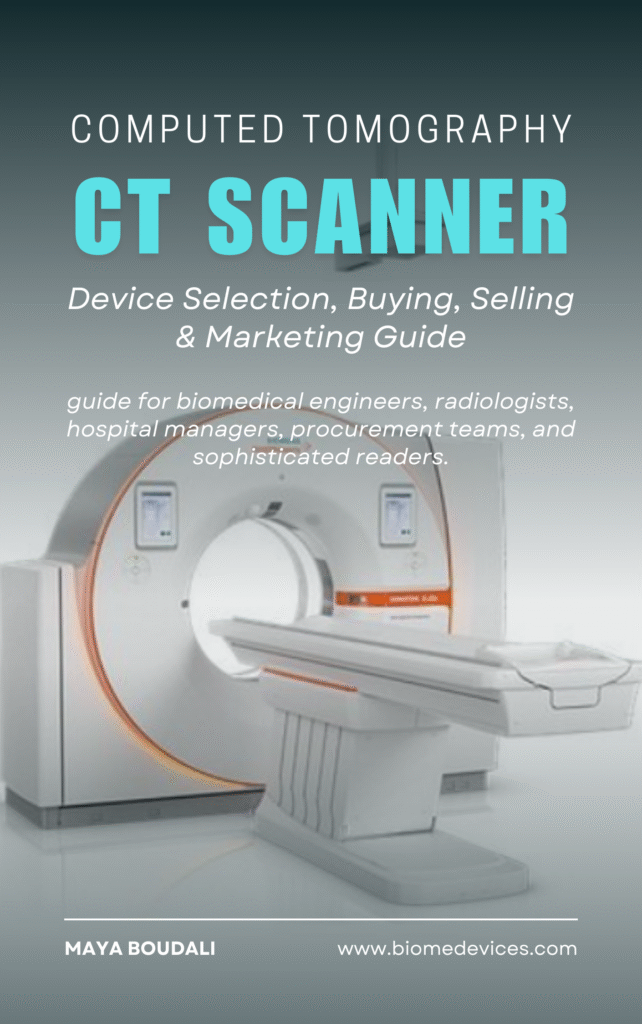
Comparison of SOMATOM On.site vs O-arm vs AIRO CT in Intraoperative Imaging
Intraoperative imaging systems are essential in modern image-guided surgery, especially in neurosurgery and spinal procedures. They allow surgeons to verify implant placement, tumor resection, and anatomical alignment in real time.
This article provides a technical and objective comparison between three widely used intraoperative CT systems:
- SOMATOM On.site
- O-arm
- AIRO CT
We will compare them across engineering design, imaging performance, clinical applications, workflow integration, and operational constraints.
1. System Overview (Engineering Perspective)
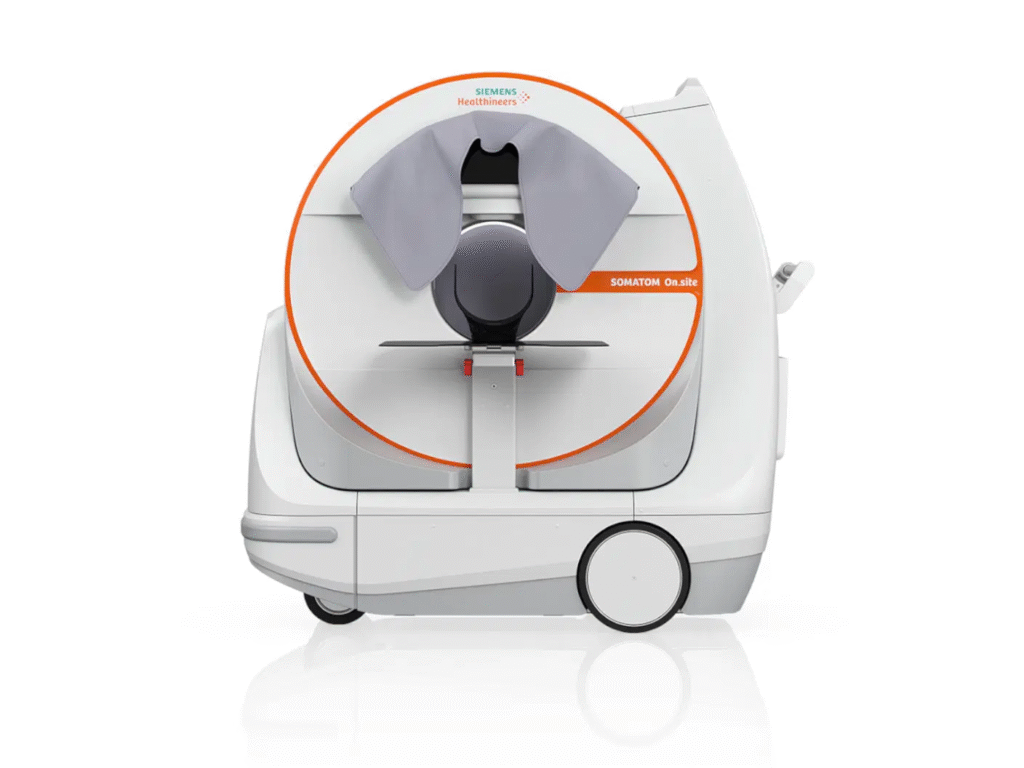
SOMATOM On.site
- Manufacturer: Siemens Healthineers
- Country: Germany
- System Type: Mobile multi-slice CT (MSCT-based intraoperative imaging system)
Engineering Position
SOMATOM On.site is based on a multi-slice CT architecture, similar in principle to diagnostic CT scanners but redesigned for mobility and intraoperative deployment.
Core Design Philosophy
- Bring diagnostic-level CT imaging directly into the operating room
- Maintain high image quality for soft tissue visualization
- Reduce patient transport between OR and radiology departments
Key Engineering Feature
Unlike cone-beam systems, this device relies on:
- Advanced reconstruction algorithms similar to hospital CT systems
- High-resolution axial imaging
- Multi-detector row geometry
O-arm
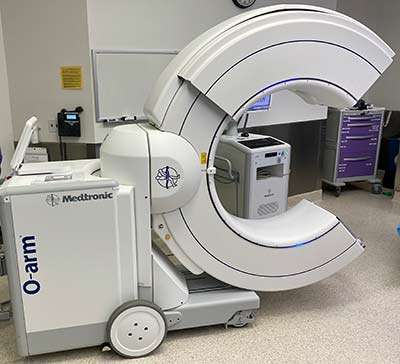
- Manufacturer: Medtronic
- Country: United States
- System Type: Cone-Beam CT (CBCT) intraoperative imaging system
Engineering Position
The O-arm is designed specifically for surgical navigation and orthopedic precision, particularly in spine surgery.
Core Design Philosophy
- Optimize imaging for bone structure visualization
- Integrate tightly with surgical navigation systems
- Provide rapid intraoperative 3D imaging
Key Engineering Feature
The system uses:
- C-arm rotational geometry
- Cone-beam X-ray projection
- Flat-panel detector reconstruction
This results in:
- Lower soft-tissue contrast compared to MSCT systems
- Excellent spatial resolution for bone
AIRO CT
- Manufacturer: Brainlab
- Country: Germany
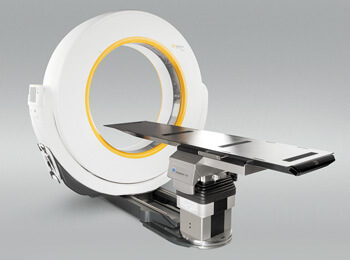
- System Type: Mobile multi-slice CT (MSCT-based intraoperative CT system)
Engineering Position
AIRO CT is a mobile multi-slice CT system designed for flexible intraoperative imaging across multiple surgical specialties.
Core Design Philosophy
- Provide CT-quality imaging in a mobile intraoperative platform
- Enable multi-specialty use (neurosurgery, spine, trauma)
- Integrate seamlessly with digital surgical navigation ecosystems
Key Engineering Feature
- Strong interoperability with navigation software platforms
- Multi-detector CT architecture
- Iterative reconstruction for dose and noise optimization
2. Engineering Architecture Comparison
2.1 Imaging Technology
| System | Imaging Principle | Detector Type | Reconstruction |
|---|---|---|---|
| SOMATOM On.site | Multi-slice CT (conventional geometry) | Multi-row detector array | Iterative + filtered back projection |
| O-arm | Cone-beam CT (CBCT) | Flat-panel detector | CBCT reconstruction algorithms |
| AIRO CT | Multi-slice CT | Multi-detector CT array | Advanced iterative reconstruction |
Key Insight
- SOMATOM On.site and AIRO CT behave closer to diagnostic CT systems.
- O-arm uses CBCT, which is better for geometry visualization but has lower soft-tissue contrast.
2.2 Mechanical Design & Mobility
- SOMATOM On.site: Fully mobile CT gantry on a transport system designed to move into OR suites.
- AIRO CT: Mobile CT scanner optimized for flexible positioning around surgical tables.
- O-arm: C-shaped gantry rotating around the patient, often docked around the operating table.
Engineering implication:
- Mobile CT systems (On.site, AIRO) require vibration isolation and transport stability.
- O-arm requires precise rotational geometry but less physical relocation.
3. Imaging Performance Comparison
3.1 Spatial Resolution & Soft Tissue Contrast
- SOMATOM On.site: High soft-tissue contrast (closest to diagnostic CT)
- AIRO CT: High-quality CT imaging suitable for multiple anatomical regions
- O-arm: Excellent bone visualization, lower soft-tissue contrast compared to multi-slice CT systems
3.2 Field of View
- SOMATOM On.site → Larger field of view (closer to standard CT)
- AIRO CT → Moderate to large field depending on configuration
- O-arm → Limited field of view, optimized for spine and cranial procedures
3.3 Radiation Dose Considerations
All systems must balance:
- Image quality
- Radiation exposure
- Intraoperative time constraints
CBCT systems (O-arm) may require different dose optimization strategies compared to multi-slice CT systems.
4. Clinical Applications
SOMATOM On.site
- Neurosurgery (tumor resection, hematoma evacuation)
- Intraoperative brain imaging
- Complex cranial procedures
- Some spinal applications
O-arm
- Spine surgery (primary use case)
- Pedicle screw placement
- Orthopedic navigation
- Cranial navigation procedures
AIRO CT
- Neurosurgery
- Spine surgery
- Trauma surgery
- General intraoperative CT imaging
5. Workflow Integration
SOMATOM On.site
- Integration with surgical navigation systems
- DICOM-based hospital systems
- Designed for OR mobility and imaging-on-demand workflows
O-arm
- Deep integration with navigation platforms (e.g., Medtronic StealthStation ecosystem)
- Highly optimized for spine surgical workflows
AIRO CT
- Flexible integration with multiple navigation systems
- Designed for multi-specialty OR environments
6. Engineering Strengths and Limitations
6.1 SOMATOM On.site
Strengths
- High image quality (multi-slice CT)
- Strong soft tissue visualization
- Broad clinical use beyond spine surgery
Limitations
- Large system footprint in OR environment
- Complex setup and workflow planning
- Higher infrastructure requirements
6.2 O-arm
Strengths
- Excellent for spinal instrumentation
- Fast intraoperative imaging
- Tight integration with navigation systems
- Compact OR integration
Limitations
- Limited soft-tissue imaging
- Smaller field of view
- Less versatile outside spine surgery
6.3 AIRO CT
Strengths
- Multi-purpose intraoperative CT
- Good balance of mobility and imaging quality
- Flexible surgical applications
Limitations
- Still less widely adopted than competitors
- Operational complexity in mixed surgical environments
7. Key Engineering Differences
7.1 Imaging Modality Trade-offs
- SOMATOM On.site → Diagnostic CT-level imaging
- O-arm → CBCT optimized for bone structure
- AIRO CT → Hybrid performance between both systems
7.2 System Design Philosophy
- SOMATOM On.site → Mobile diagnostic CT in OR environment
- O-arm → Surgery-integrated imaging system (spine-focused)
- AIRO CT → Flexible multi-surgical imaging platform
7.3 Clinical Workflow Strategy
- SOMATOM On.site → Imaging support for complex neurosurgery
- O-arm → Navigation-driven orthopedic precision tool
- AIRO CT → General-purpose intraoperative CT solution
8. Future Trends in Intraoperative CT Systems
Across all systems, biomedical engineering research is moving toward:
8.1 AI-Based Reconstruction
- Faster image reconstruction
- Lower radiation dose
- Improved noise suppression
8.2 Hybrid Imaging Systems
- CT + optical tracking
- MRI-CT hybrid operating rooms
8.3 Automation in Surgery
- Real-time feedback loops
- AI-guided surgical corrections
8.4 Smaller and More Mobile CT Units
- Compact gantry designs
- Improved OR integration efficiency
These trends suggest that future intraoperative imaging systems will become more autonomous, faster, and more integrated with surgical robotics.
9. Conclusion
The comparison between SOMATOM On.site, O-arm, and AIRO CT highlights three distinct engineering approaches to intraoperative imaging.
- SOMATOM On.site prioritizes high-quality diagnostic imaging within the OR environment
- O-arm prioritizes surgical navigation precision for spine procedures
- AIRO CT aims to balance mobility, image quality, and multi-specialty usability
From a biomedical engineering perspective, these systems represent different solutions to the same problem: delivering accurate, real-time imaging during surgery without disrupting workflow.
The future direction of intraoperative CT systems will likely converge toward:
- AI-assisted imaging
- Lower radiation dose systems
- Better integration with surgical robotics
- Faster and more automated reconstruction pipelines
References (APA Style)
Medtronic. (n.d.). O-arm imaging system. https://www.medtronic.com
IMRIS / Brainlab / AIRO CT resources. (n.d.). Intraoperative CT imaging systems. https://www.airoct.com
Siemens Healthineers. (n.d.). SOMATOM CT systems overview. https://www.siemens-healthineers.com/computed-tomography
National Institute of Biomedical Imaging and Bioengineering (NIBIB). (n.d.). Computed tomography (CT). https://www.nibib.nih.gov/science-education/science-topics/computed-tomography-ct