Human Body Systems: A Complete Guide to Anatomy and Physiology
Introduction
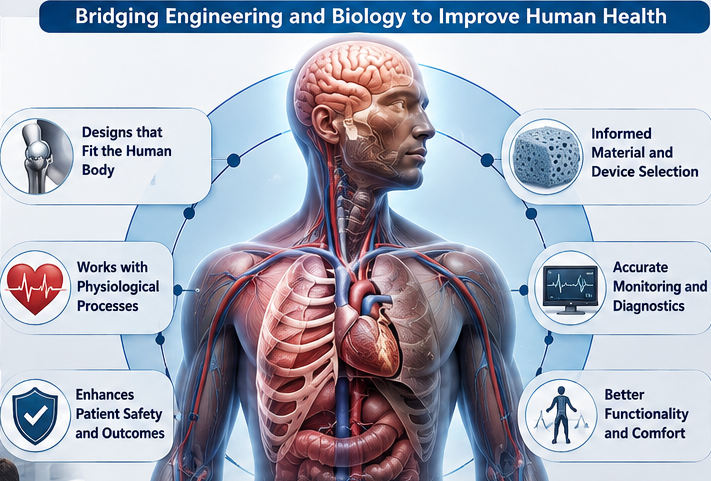
The human body is one of the most complex biological systems known. It consists of trillions of cells organized into tissues, organs, and organ systems that work together to maintain life. Understanding human body systems is fundamental for students of anatomy, physiology, medicine, nursing, biomedical engineering, and other health sciences.
A useful way to think about the body is as a highly advanced city:
- The nervous system acts like the communication network.
- The cardiovascular system functions as the transportation system.
- The respiratory system supplies oxygen like an energy plant.
- The digestive system processes raw materials into usable nutrients.
- The urinary system handles waste disposal.
- The immune system serves as security and defense.
Although each system has specialized functions, none works independently. Life depends on constant interaction between all body systems to maintain homeostasis, the body’s stable internal environment.
Table of Contents
- Introduction
- Overview of Human Body Systems
- Levels of Organization
- Integumentary System
- Skeletal System
- Muscular System
- Nervous System
- Endocrine System
- Cardiovascular System
- Lymphatic and Immune System
- Respiratory System
- Digestive System
- Urinary System
- Reproductive System
- Interaction Between Body Systems
- Clinical Relevance
- Practical Examples
- Summary Points
- Frequently Asked Questions
- Conclusion
- Key Takeaways
- Academic References
1- Overview of Human Body Systems
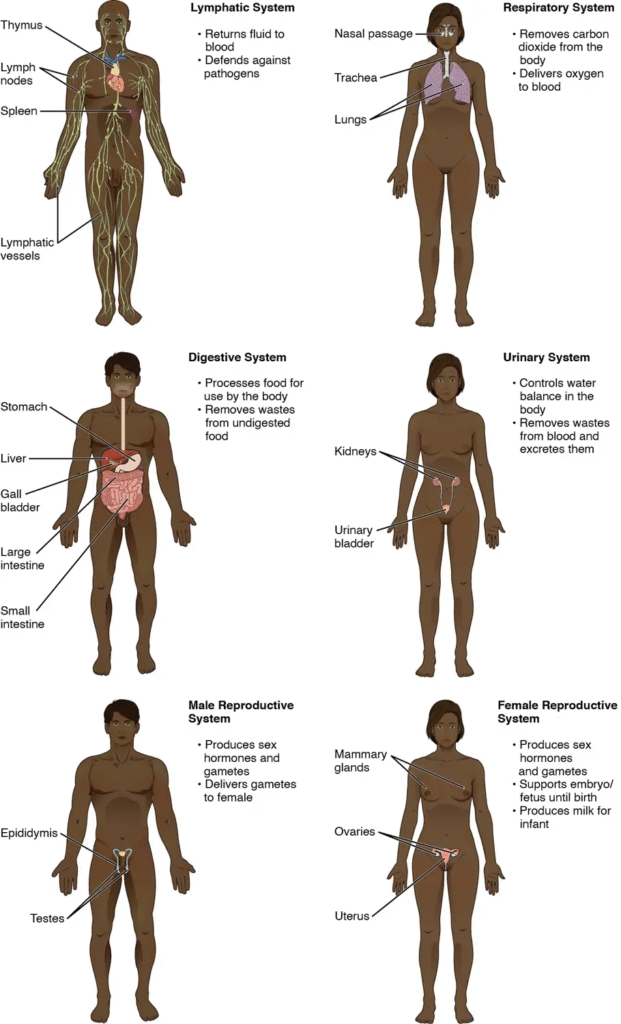
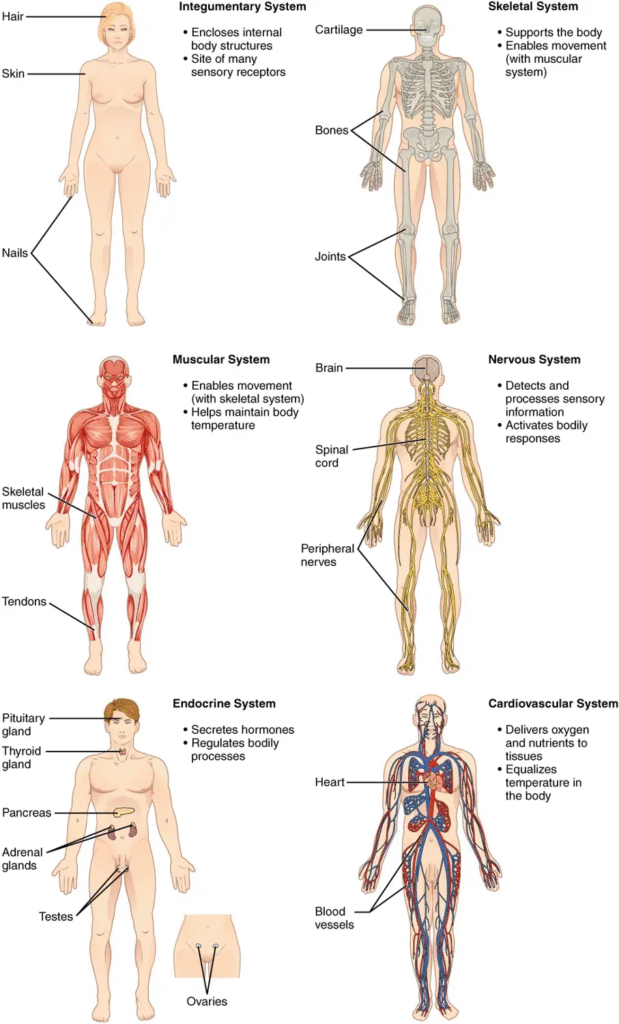
The human body contains 11 major organ systems.
| System | Primary Function |
|---|---|
| Integumentary | Protection |
| Skeletal | Support |
| Muscular | Movement |
| Nervous | Communication |
| Endocrine | Hormonal regulation |
| Cardiovascular | Transport |
| Lymphatic/Immune | Defense |
| Respiratory | Gas exchange |
| Digestive | Nutrition |
| Urinary | Waste removal |
| Reproductive | Reproduction |
2- Levels of Organization
Before studying body systems, it is important to understand structural organization.
The body is organized into:
- Chemical level
- Cellular level
- Tissue level
- Organ level
- Organ system level
- Organism level
Example
- Carbon atom
- Water molecule
- Muscle cell
- Cardiac muscle tissue
- Heart
- Cardiovascular system
- Human body
3- Integumentary System
Structure
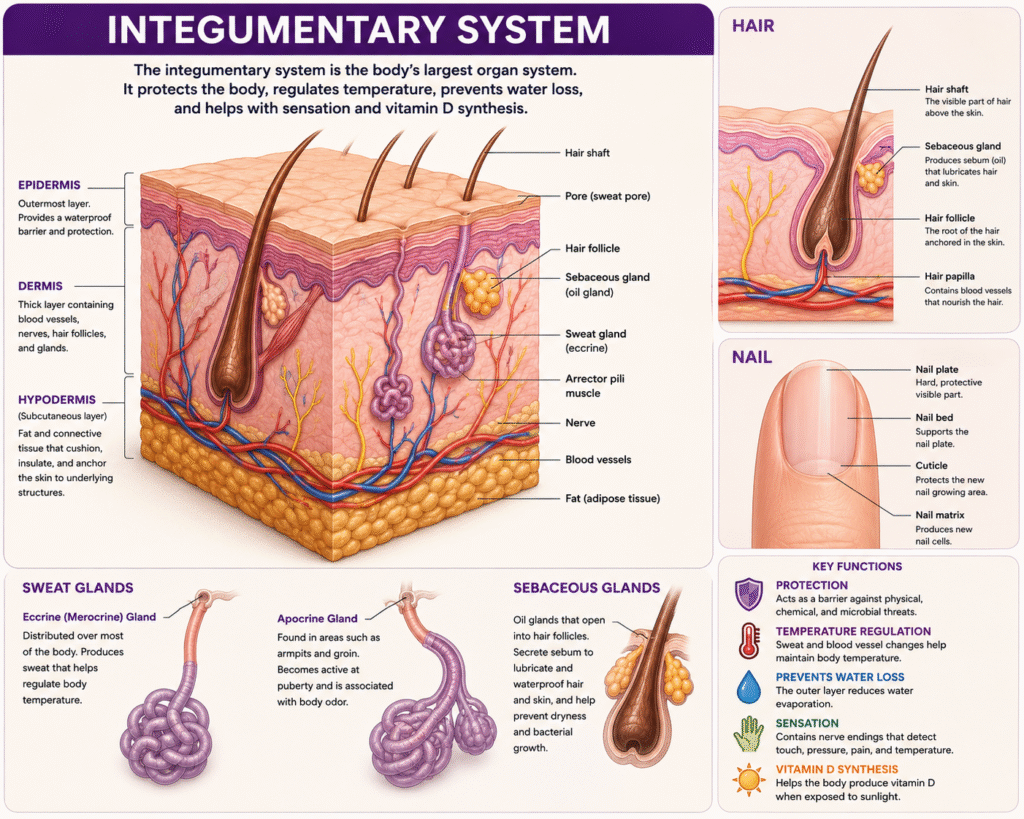
The integumentary system consists of:
- Skin
- Hair
- Nails
- Sweat glands
- Sebaceous glands
The skin is the largest organ in the body.
Functions
Protection
The skin forms a physical barrier against:
- pathogens
- chemicals
- UV radiation
Temperature Regulation
Sweat glands and blood vessels help maintain body temperature.
Sensation
The skin contains receptors for:
- touch
- pressure
- pain
- temperature
Vitamin D Production
Sunlight stimulates vitamin D synthesis in the skin.
Clinical Relevance
Examples include:
- burns
- skin cancer
- dermatitis
- psoriasis
4- Skeletal System
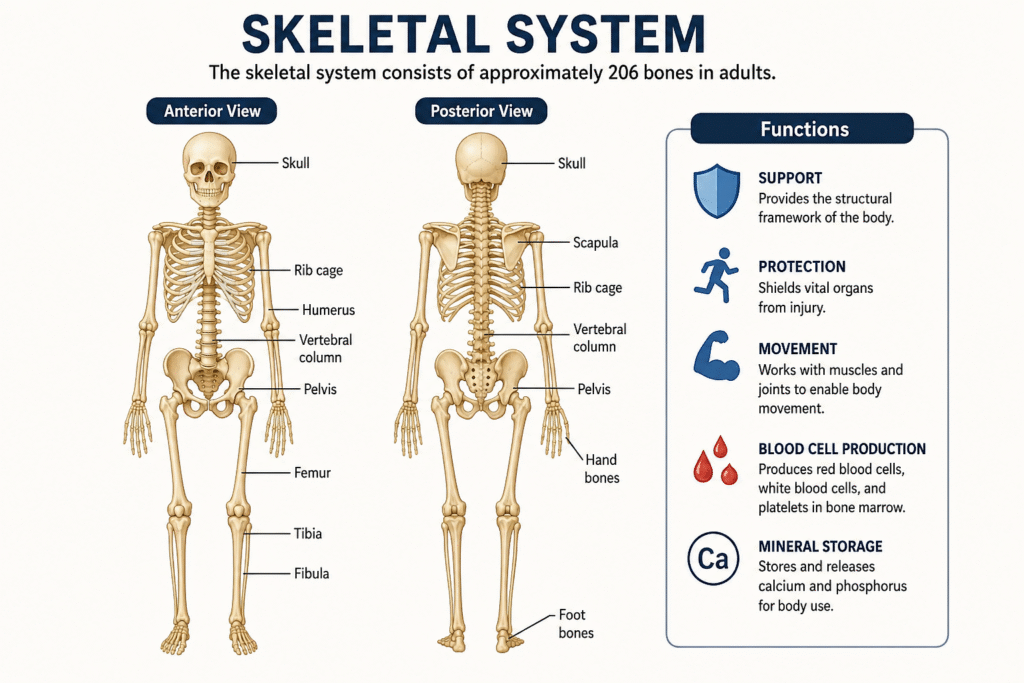
The skeletal system consists of approximately 206 bones in adults.
Functions
Support
Bones provide the body’s framework.
Protection
Examples:
- Skull protects the brain.
- Rib cage protects the heart and lungs.
Movement
Bones act as levers for muscles.
Blood Cell Production
Red bone marrow produces:
- red blood cells
- white blood cells
- platelets
Mineral Storage
Bones store:
- calcium
- phosphorus
Major Components
| Component | Function |
|---|---|
| Bones | Support |
| Cartilage | Cushioning |
| Ligaments | Connect bone to bone |
| Joints | Allow movement |
5- Muscular System
The muscular system allows movement and posture.
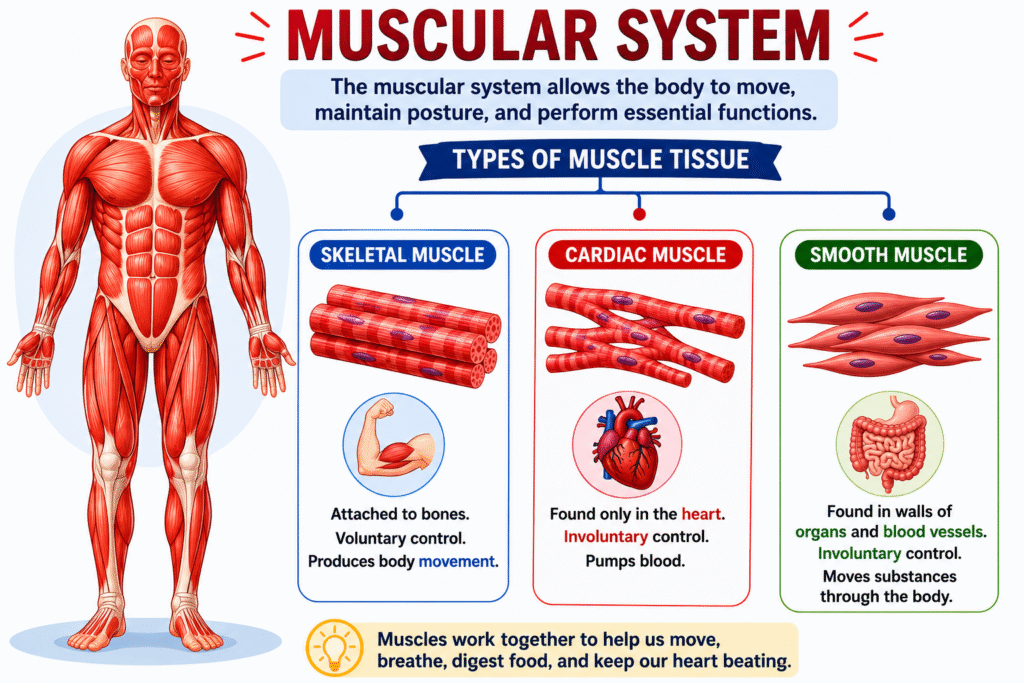
Types of Muscle Tissue
| Type | Location | Control |
|---|---|---|
| Skeletal | Attached to bones | Voluntary |
| Cardiac | Heart | Involuntary |
| Smooth | Organs and vessels | Involuntary |
Functions
- Movement
- Heat production
- Posture maintenance
- Joint stabilization
Easy Memory Tip
Muscles move, maintain, and make heat.
6- Nervous System
The nervous system is the body’s rapid communication network.
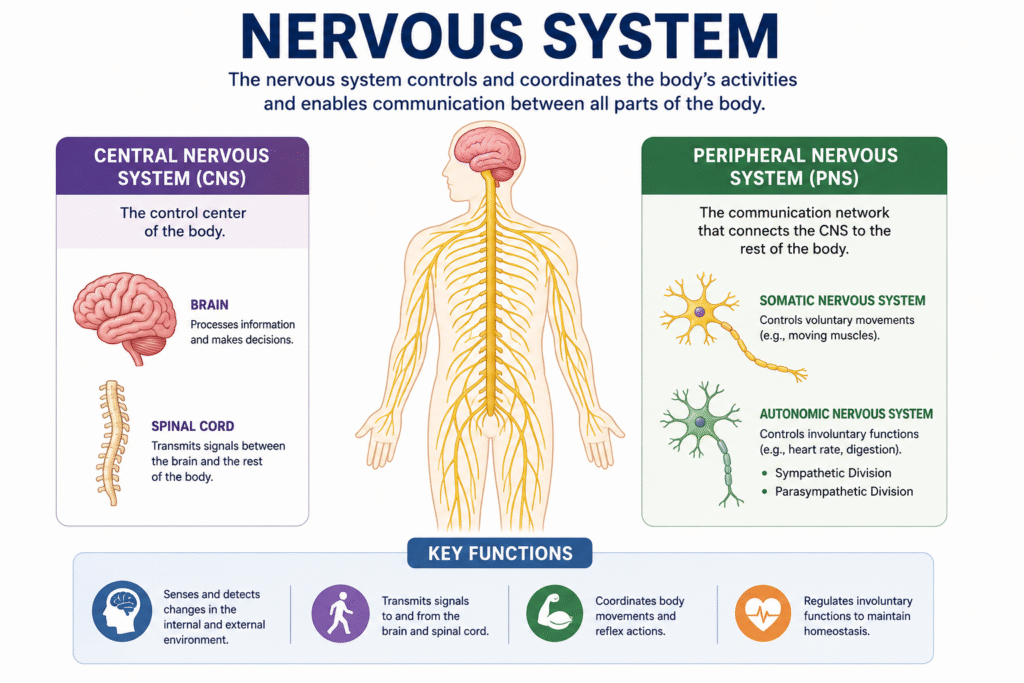
Main Divisions
Central Nervous System (CNS)
Includes:
- Brain
- Spinal cord
Peripheral Nervous System (PNS)
Includes:
- Cranial nerves
- Spinal nerves
Functions
Sensory Input
Receives information from the environment.
Integration
Processes information.
Motor Output
Produces responses.
Example
Touching a hot surface:
- Receptors detect heat.
- Signals travel to the spinal cord.
- Muscles contract.
- Hand withdraws rapidly.
Clinical Relevance
- Stroke
- Epilepsy
- Multiple sclerosis
- Parkinson’s disease
8- Endocrine System
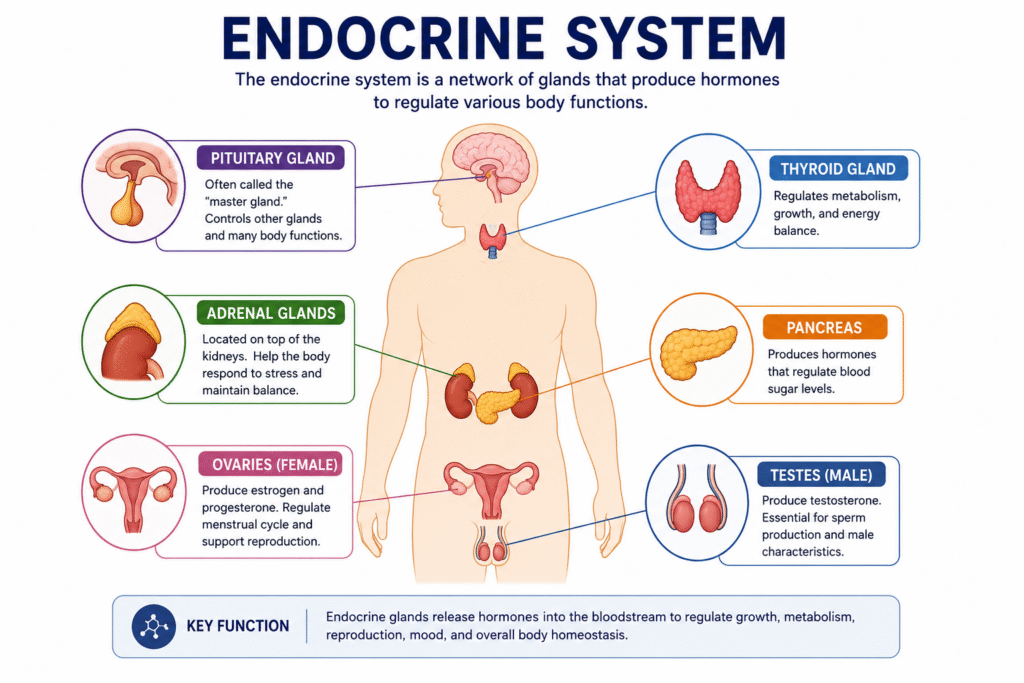
The endocrine system regulates body functions using hormones.
Major Glands
| Gland | Function |
|---|---|
| Pituitary | Master gland |
| Thyroid | Metabolism |
| Adrenal | Stress response |
| Pancreas | Blood glucose regulation |
| Ovaries/Testes | Reproduction |
Hormones
Hormones are chemical messengers that travel through the bloodstream.
Examples:
- Insulin
- Growth hormone
- Thyroxine
- Cortisol
Nervous vs Endocrine System
| Feature | Nervous | Endocrine |
|---|---|---|
| Signal Type | Electrical | Chemical |
| Speed | Fast | Slow |
| Duration | Short | Long |
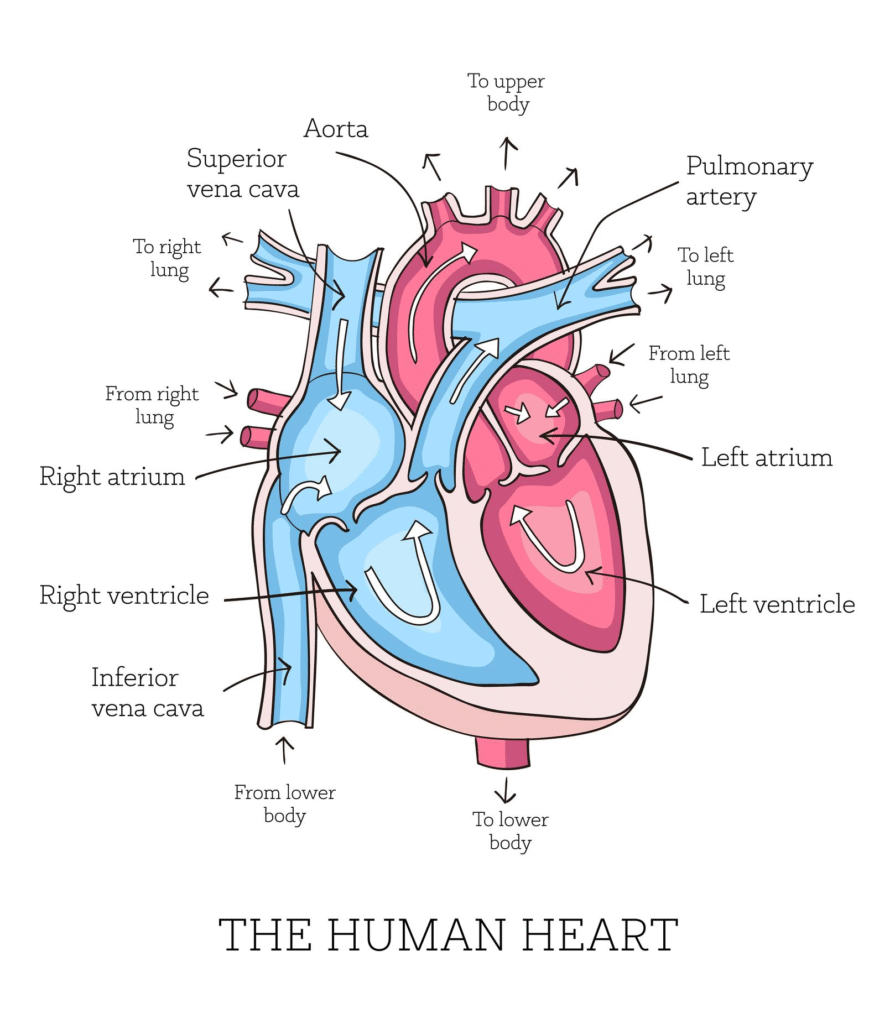
9- Cardiovascular System
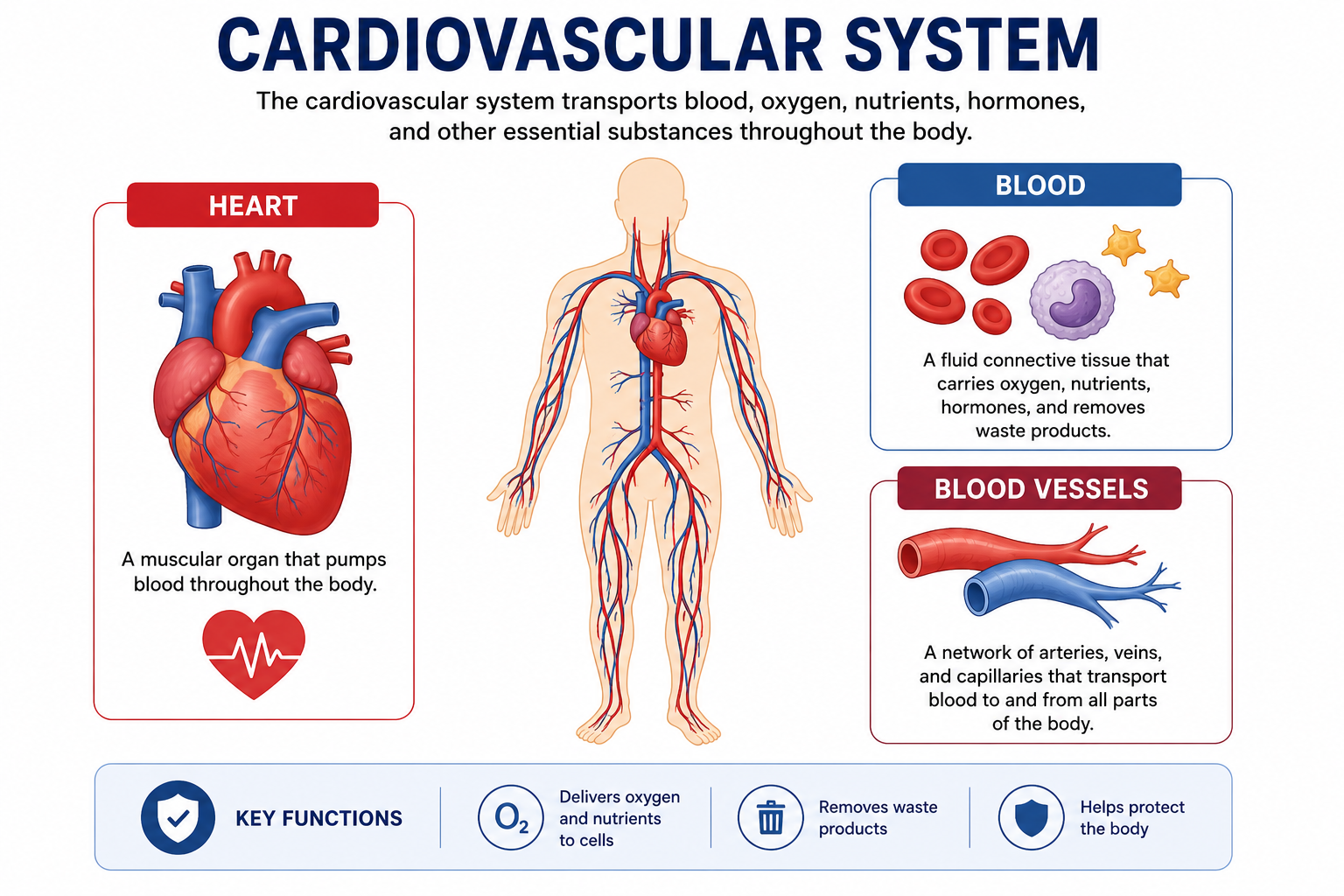
The cardiovascular system transports materials throughout the body.
Components
- Heart
- Blood
- Blood vessels
Types of Blood Vessels
| Vessel | Function |
|---|---|
| Arteries | Carry blood away from heart |
| Veins | Return blood to heart |
| Capillaries | Exchange materials |
Functions
- Oxygen transport
- Nutrient delivery
- Waste removal
- Hormone transport
- Temperature regulation
Circulation Types
Pulmonary Circulation
Heart → Lungs → Heart
Systemic Circulation
Heart → Body → Heart
10- Lymphatic and Immune System
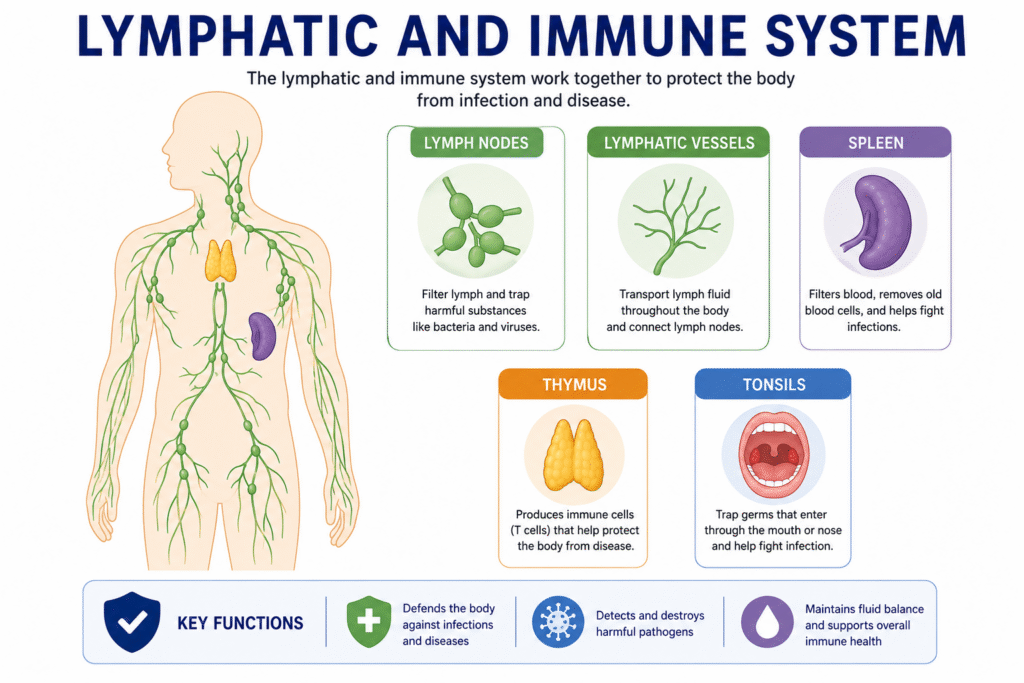
This system protects the body from disease.
Components
- Lymph nodes
- Lymphatic vessels
- Spleen
- Thymus
- Tonsils
Functions
Fluid Balance
Returns excess tissue fluid to circulation.
Immune Defense
Detects and destroys pathogens.
Fat Absorption
Transports dietary fats from the intestine.
Clinical Relevance
- Lymphedema
- HIV/AIDS
- Lymphoma
11- Respiratory System
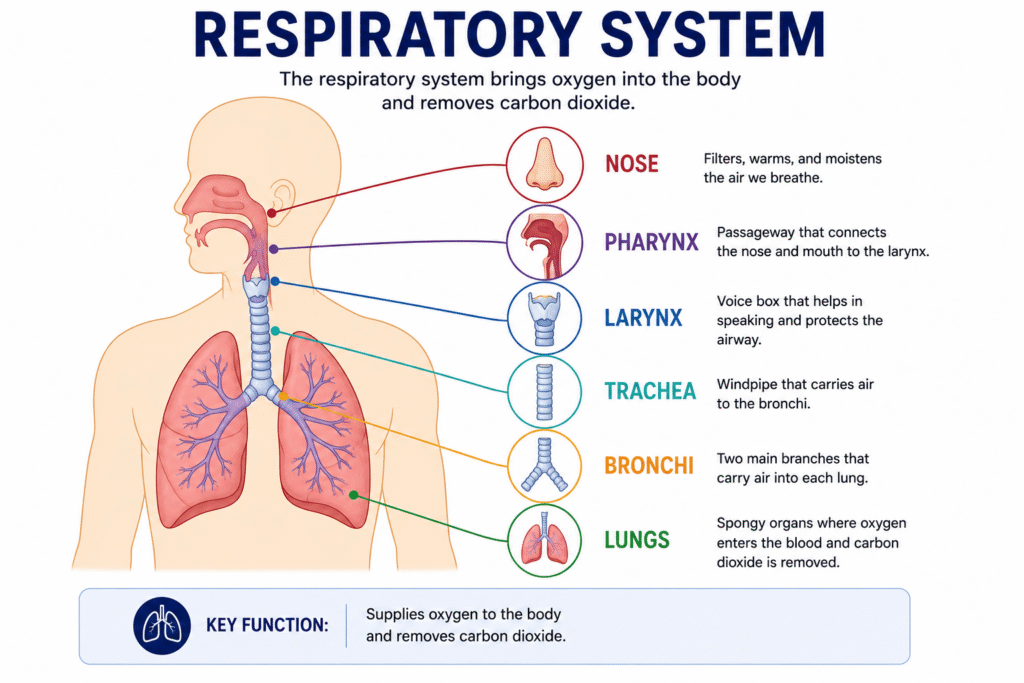
The respiratory system exchanges oxygen and carbon dioxide.
Major Structures
- Nose
- Pharynx
- Larynx
- Trachea
- Bronchi
- Lungs
Physiology of Breathing
Inhalation
- Diaphragm contracts
- Chest cavity expands
- Air enters lungs
Exhalation
- Diaphragm relaxes
- Chest cavity decreases
- Air exits lungs
Clinical Relevance
- Asthma
- Pneumonia
- COPD
- Lung cancer
12- Digestive System
The digestive system processes food into nutrients.
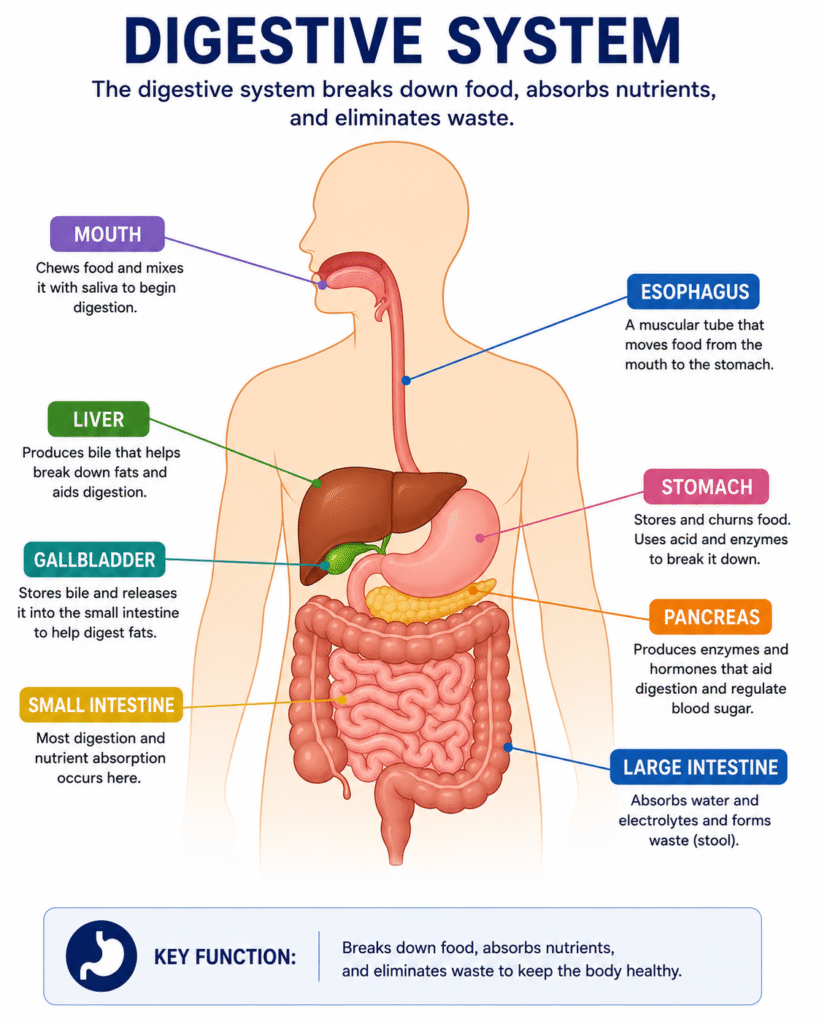
Major Organs
- Mouth
- Esophagus
- Stomach
- Small intestine
- Large intestine
- Liver
- Pancreas
- Gallbladder
Main Functions
Digestion
Breakdown of food.
Absorption
Transfer of nutrients into blood.
Elimination
Removal of waste.
Memory Tip
Digest → Absorb → Eliminate
14- Urinary System
The urinary system regulates body fluids and removes waste.
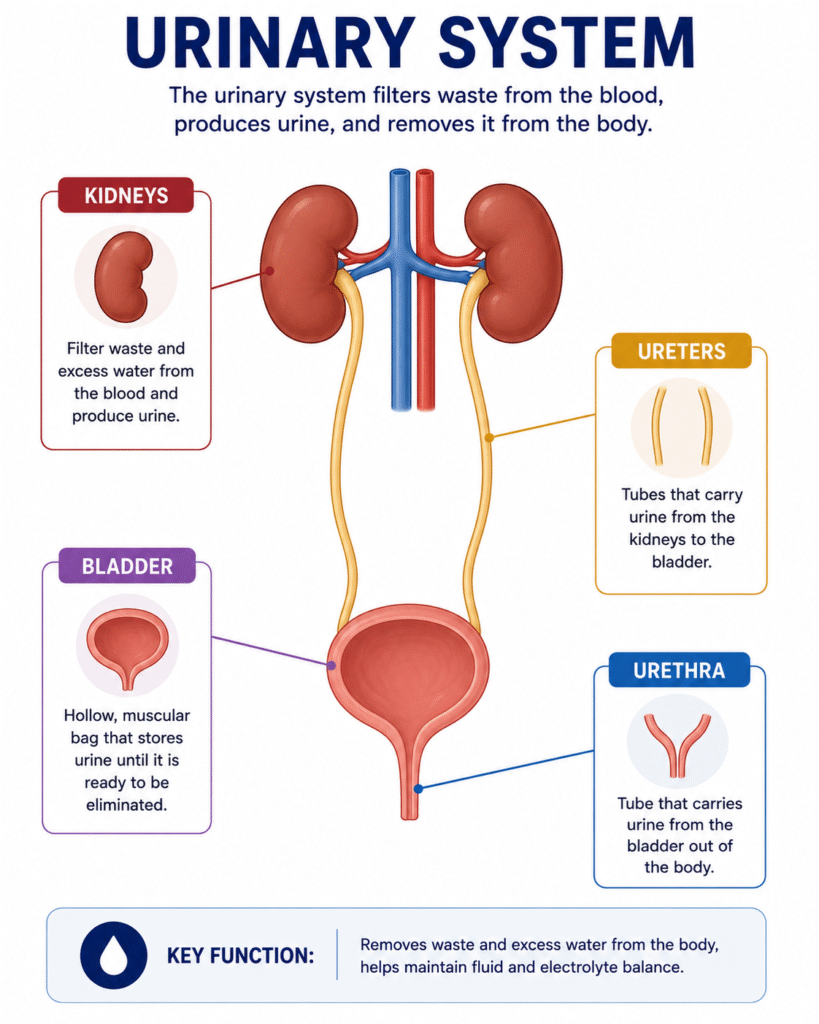
Main Organs
- Kidneys
- Ureters
- Bladder
- Urethra
Functions
Filtration
Removes waste from blood.
Water Balance
Maintains hydration.
Electrolyte Regulation
Controls:
- sodium
- potassium
- calcium
Clinical Relevance
- Kidney stones
- Urinary tract infections
- Kidney failure
15- Reproductive System
The reproductive system enables reproduction and continuation of the species.
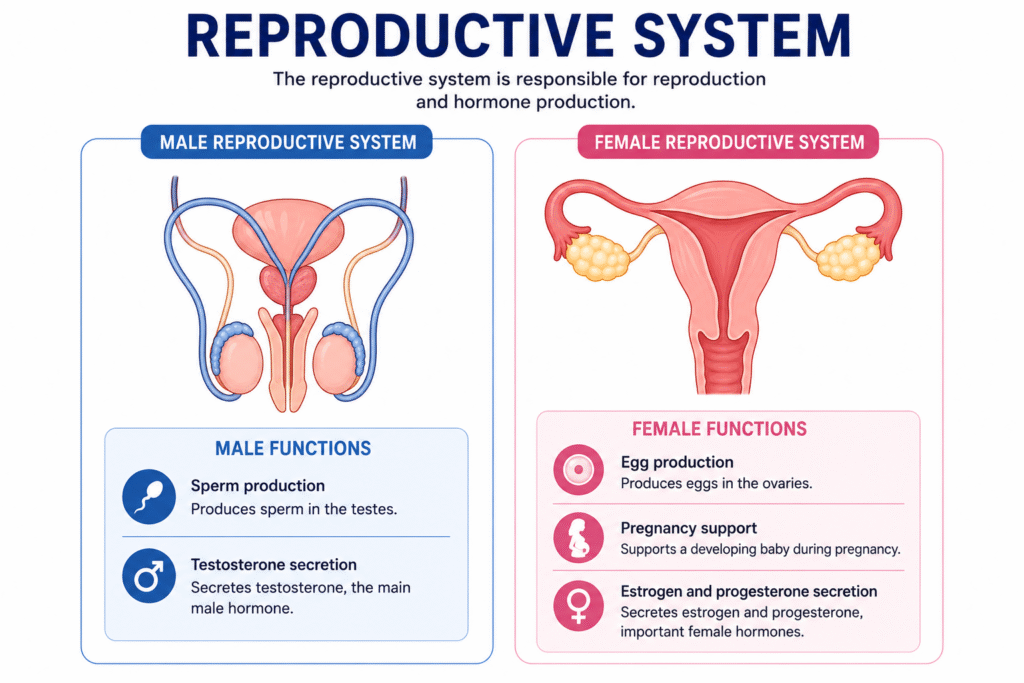
Male Functions
- Sperm production
- Testosterone secretion
Female Functions
- Egg production
- Pregnancy support
- Estrogen and progesterone secretion
Clinical Relevance
- Infertility
- Endometriosis
- Prostate disorders
Interaction Between Body Systems
No body system works alone.
Example: Running
When you run:
- Muscular system contracts.
- Respiratory system increases oxygen intake.
- Cardiovascular system delivers oxygen.
- Nervous system coordinates movement.
- Endocrine system releases adrenaline.
- Integumentary system produces sweat.
Clinical Relevance
Understanding body systems helps explain diseases.
Examples:
| Disease | Systems Involved |
|---|---|
| Diabetes | Endocrine, cardiovascular, nervous |
| Hypertension | Cardiovascular, renal |
| Asthma | Respiratory, immune |
| Osteoporosis | Skeletal, endocrine |
Practical Examples
Example 1: Fever
During infection:
- Immune system detects pathogens.
- Endocrine system assists regulation.
- Nervous system adjusts body temperature.
Example 2: Dehydration
Affected systems:
- Urinary
- Cardiovascular
- Nervous
Example 3: Exercise
Nearly every body system participates simultaneously.
Summary Points
- The human body contains 11 major organ systems.
- Each system has specialized functions.
- Homeostasis depends on cooperation between systems.
- Anatomy explains structure.
- Physiology explains function.
- Disease often affects multiple systems.
Conclusion
Human body systems form an interconnected network that sustains life. Each system has unique anatomical structures and physiological functions, yet all depend on one another. Understanding these systems provides the foundation for anatomy, physiology, medicine, nursing, biomedical engineering, and clinical practice.
The most important principle to remember is that structure supports function. Every organ, tissue, and cell is designed to perform a specific role. When these structures work together effectively, the body maintains health and homeostasis. When they fail, disease develops.
By mastering the fundamentals of human body systems, students gain the essential framework needed for advanced study in medical and biological sciences.
Key Takeaways
Quick Revision Notes
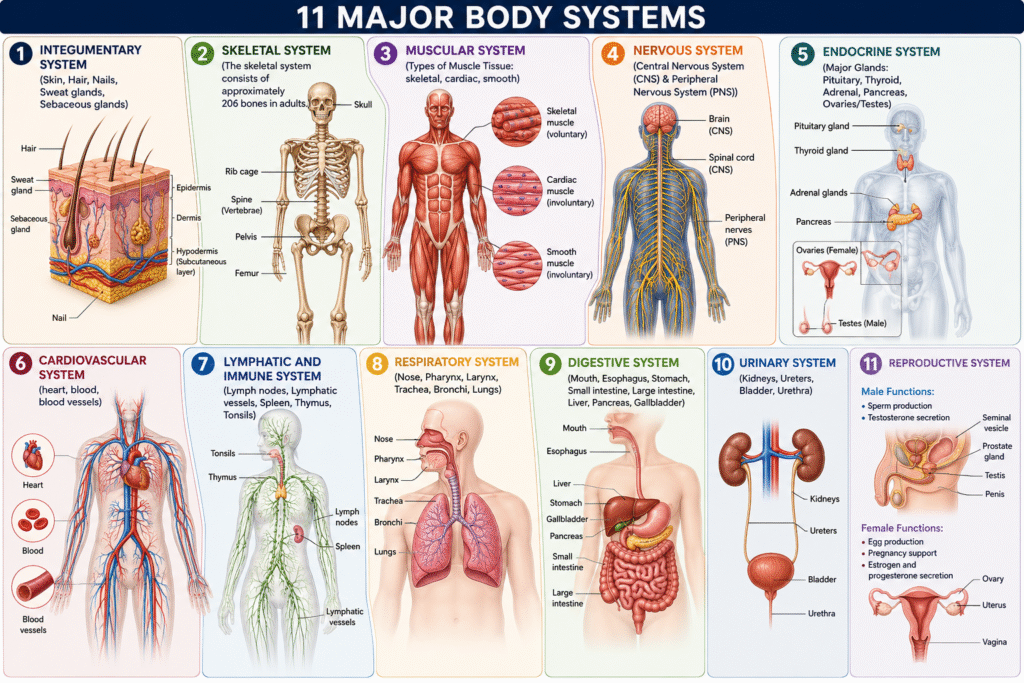
- Human body contains 11 major organ systems.
- The integumentary system protects the body.
- The skeletal system supports and protects organs.
- The muscular system produces movement.
- The nervous system provides rapid communication.
- The endocrine system uses hormones for regulation.
- The cardiovascular system transports materials.
- The lymphatic system supports immunity.
- The respiratory system exchanges gases.
- The digestive system absorbs nutrients.
- The urinary system removes waste.
- The reproductive system enables reproduction.
- All systems work together to maintain homeostasis.
Academic References
- Hall, J. E. (2020). Guyton and Hall Textbook of Medical Physiology (14th ed.). Elsevier. https://www.elsevier.com/books/guyton-and-hall-textbook-of-medical-physiology/hall/978-0-323-59712-8
- Standring, S. (2020). Gray’s Anatomy: The Anatomical Basis of Clinical Practice (42nd ed.). Elsevier. https://www.elsevier.com/books/grays-anatomy/standring/978-0-7020-7707-4
- OpenStax. (2023). Anatomy and Physiology 2e. Rice University. https://openstax.org/details/books/anatomy-and-physiology-2e
- National Center for Biotechnology Information (NCBI Bookshelf). Anatomy, Physiology and Homeostasis Resources. https://www.ncbi.nlm.nih.gov/books/
- National Institutes of Health (NIH). Human Body Systems and Health Information. https://www.nih.gov
- Cleveland Clinic. Body Systems Overview. https://my.clevelandclinic.org/health/body
- Mayo Clinic. Human Anatomy and Physiology Resources. https://www.mayoclinic.org
- Encyclopaedia Britannica. Human Body. https://www.britannica.com/science/human-body
- World Health Organization (WHO). Health Topics. https://www.who.int/health-topics
- Tortora, G. J., & Derrickson, B. (2021). Principles of Anatomy and Physiology (16th ed.). Wiley. https://www.wiley.com/en-us/Principles+of+Anatomy+and+Physiology-p-9781119662794